 Add as a preferred source on Google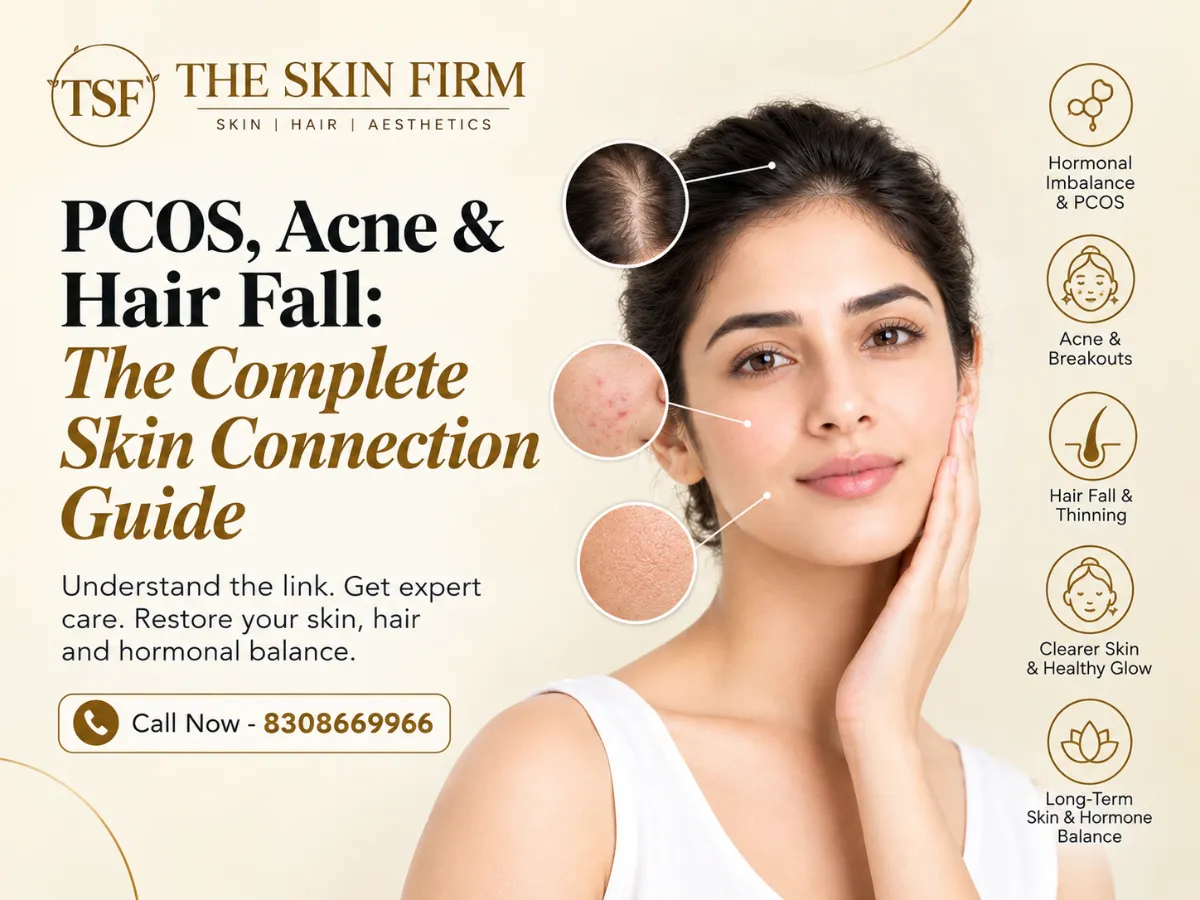
If you have PCOS and feel like your skin and hair issues never fully respond to standard acne or hair loss treatments, there is a genuine biological reason — the underlying hormonal imbalance driving your PCOS is also driving your skin and hair symptoms, and treating one without addressing the other rarely delivers lasting results. At The Skin Firm — South Pune's best skin clinic and aesthetic clinic at NIBM Mohammed Wadi — Dr. Karishma Singh, skin specialist and aesthetic dermatologist, explains the genuine connection between PCOS, acne, and hair fall, and what a properly integrated treatment approach actually looks like.
What Is PCOS and Why Does It Affect Your Skin and Hair?
Polycystic Ovary Syndrome (PCOS) is a hormonal condition affecting a significant percentage of women of reproductive age, characterised by elevated androgen (male hormone) levels, insulin resistance, and often irregular ovulation. While PCOS is fundamentally a reproductive and metabolic condition, its hormonal effects extend well beyond fertility, directly influencing your skin's oil production and your hair follicles' sensitivity to hormonal signals throughout your body.
This is precisely why PCOS-related acne and hair fall often prove stubbornly resistant to standard dermatological treatment when the underlying hormonal driver isn't simultaneously addressed. A topical acne cream might reduce visible breakouts temporarily, but if elevated androgens continue stimulating excess oil production at the source, breakouts typically return once treatment stops, creating the frustrating cycle many PCOS patients describe.
The Hormonal Mechanism Behind PCOS Skin Symptoms
Elevated androgens in PCOS directly stimulate sebaceous glands to produce more oil than they otherwise would, creating the foundation for persistent, often treatment-resistant acne. Simultaneously, insulin resistance — present in a majority of PCOS patients — further amplifies androgen activity throughout the body, compounding this effect rather than existing as a separate, unrelated symptom.
This same androgen elevation affects hair follicles on the scalp differently than it affects facial hair growth — while excess androgens can stimulate unwanted facial and body hair growth (hirsutism), these same hormones can simultaneously cause androgenetic hair thinning at the scalp, following a pattern often called female pattern hair loss when androgen-driven, distinct from the diffuse shedding seen in other hair loss causes.
PCOS Acne: How It Genuinely Differs From Regular Acne
PCOS-related acne has recognisable characteristics that experienced dermatologists learn to identify. It typically concentrates along the jawline, chin, and lower cheeks — areas particularly responsive to androgen fluctuation — rather than the more distributed pattern often seen in typical teenage acne. It frequently persists or worsens around your menstrual cycle, reflecting the hormonal fluctuations throughout each cycle, and tends to be deeper, more cystic, and more inflammatory than superficial comedonal acne.
This pattern recognition matters clinically because PCOS-related acne genuinely responds better to treatment approaches that address hormonal drivers alongside topical care, rather than topical treatment alone. A dermatologist recognising this jawline-concentrated, cycle-linked pattern should specifically ask about your menstrual regularity, weight changes, and other PCOS indicators, even if you haven't previously received a formal PCOS diagnosis.
PCOS Hair Fall: Recognising the Androgenetic Pattern
PCOS-related hair thinning typically follows a specific pattern — diffuse thinning concentrated at the crown and part line, with the frontal hairline generally preserved, distinct from typical androgenetic hair loss patterns and different again from stress-related telogen effluvium, which causes more uniform shedding across the entire scalp.
Many PCOS patients experience both concerns simultaneously — persistent, cycle-linked acne along the jawline, alongside gradual, crown-concentrated hair thinning that develops more slowly and less dramatically than acne, sometimes going unaddressed for years simply because the pattern is subtle enough to be attributed to normal ageing rather than a genuine hormonal cause worth investigating.
Other Skin Signs of PCOS Worth Recognising
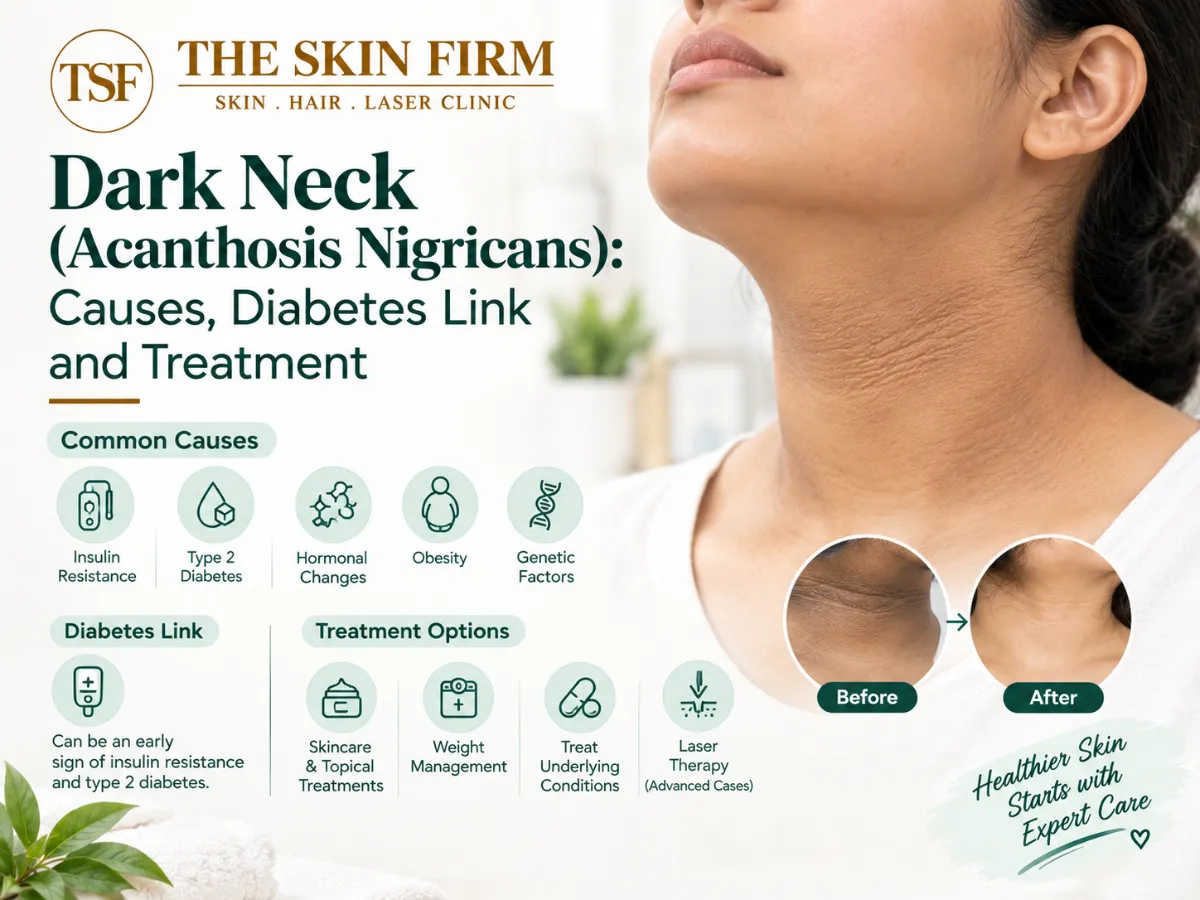
- Acanthosis Nigricans: Dark, velvety skin patches typically appearing on the neck, armpits, or groin, closely linked to insulin resistance and a genuine diagnostic clue worth mentioning to your dermatologist.
- Skin Tags: Small, benign skin growths that appear more frequently in patients with insulin resistance, often clustering around the neck and underarms.
- Hirsutism: Excess facial or body hair growth in a male-pattern distribution (upper lip, chin, chest), driven by the same elevated androgens affecting acne and scalp hair.
- Oily Skin Beyond Typical Acne Areas: Generally oilier skin across the face, not limited to acne-prone zones, reflecting broadly elevated sebum production.
When to See a Dermatologist vs a Gynaecologist
PCOS itself is diagnosed and managed by a gynaecologist or endocrinologist, typically through blood hormone testing and pelvic ultrasound. However, the skin and hair symptoms specifically benefit significantly from dermatological expertise, since a dermatologist understands exactly how to treat androgen-driven acne and hair loss at the skin and follicle level, complementing rather than replacing your gynaecological PCOS management.
At The Skin Firm, Dr. Karishma Singh regularly collaborates with patients' existing gynaecologists or endocrinologists, ensuring your skin and hair treatment plan works alongside — not in isolation from — your broader PCOS management, since hormonal treatment prescribed by your gynaecologist often directly influences how effectively your dermatological treatment performs.
Treatment Approach for PCOS-Related Acne
Effective PCOS acne treatment typically combines topical prescriptions targeting active breakouts with approaches specifically addressing the androgen-driven oil production at the source. Depending on your specific presentation and any hormonal treatment your gynaecologist has already prescribed, your dermatologist may recommend targeted topical retinoids, chemical peels for both active acne and resulting pigmentation, and in some cases, specific oral medications that address hormonal acne more directly than standard topical treatment alone.
Because PCOS acne tends to be cyclical and persistent, treatment plans generally require longer-term commitment and realistic expectations compared to typical acne — this is a manageable, not curable, aspect of PCOS, and ongoing maintenance care is the realistic long-term picture rather than a single treatment course resolving the concern permanently. Explore our comprehensive acne treatment approach at theskinfirm.in/acne-treatment-in-pune/.
Treatment Approach for PCOS-Related Hair Fall
PCOS-related hair thinning benefits from treatments that support follicle health alongside broader hormonal management. At The Skin Firm, treatment often combines PRP therapy or GFC therapy to stimulate existing follicles, hair mesotherapy for nutritional follicle support, and topical treatments specifically suited to androgenetic thinning patterns.
As with PCOS acne, realistic timelines matter — hair growth cycles are inherently slow, and PCOS-related thinning, having developed gradually, typically improves gradually as well, generally requiring several months of consistent treatment before meaningful density improvement becomes visible. Explore our full range of hair loss treatments at theskinfirm.in/hair-loss-treatment-in-pune/ and theskinfirm.in/hair-mesotherapy-in-pune/.
Lifestyle Factors That Genuinely Support Treatment
While lifestyle changes alone rarely resolve PCOS-related skin and hair symptoms entirely, certain factors genuinely support your medical treatment's effectiveness. Since insulin resistance amplifies androgen activity, dietary and exercise approaches that improve insulin sensitivity — as guided by your gynaecologist or endocrinologist — can meaningfully support your skin and hair treatment results over time, working alongside rather than replacing dermatological care.
Managing stress also matters, since cortisol elevation can compound androgen-driven skin and hair symptoms. This doesn't mean stress alone causes PCOS symptoms, but chronic, poorly managed stress can meaningfully worsen an already hormonally sensitive system, making stress management a genuinely relevant supporting factor rather than an unrelated wellness suggestion.
The Emotional Impact of PCOS Skin and Hair Symptoms
Beyond the physical symptoms, persistent acne and visible hair thinning carry a genuine emotional weight that deserves acknowledgment, not dismissal. Many PCOS patients describe years of feeling unheard by healthcare providers who focus exclusively on fertility or metabolic concerns while treating the visible skin and hair symptoms as secondary or purely cosmetic.
At The Skin Firm, we recognise that how PCOS affects your visible appearance genuinely matters to your overall wellbeing and confidence, not just your physical health metrics. This is why Dr. Karishma Singh takes time to understand not just your specific symptoms, but how they are affecting you personally, building a treatment plan around your actual priorities and concerns.
Long-Term Management: What to Realistically Expect
PCOS is a chronic condition, and its skin and hair manifestations typically require ongoing, long-term management rather than a single treatment course resolving symptoms permanently. This doesn't mean treatment is ineffective — most patients achieve significant, meaningful improvement — but understanding that periodic maintenance treatment, particularly during hormonal fluctuations or if you pause treatment temporarily, is a realistic part of managing PCOS-related skin and hair concerns over time.
Many patients find that once their treatment plan stabilises their symptoms, maintenance requires considerably less intensive intervention than the initial treatment phase, making long-term management genuinely sustainable rather than requiring the same level of ongoing intervention indefinitely.
Why Choose The Skin Firm for PCOS-Related Skin and Hair Concerns
Treating PCOS-related acne and hair fall effectively requires recognising the hormonal pattern behind both concerns, not treating them as coincidentally occurring, unrelated issues. At The Skin Firm, Dr. Karishma Singh takes a genuinely integrated approach, considering your full hormonal picture when building your treatment plan, and coordinating with your existing gynaecological care rather than working in isolation.
Book Your PCOS Skin and Hair Consultation at The Skin Firm
If PCOS is affecting your skin and hair, The Skin Firm offers a genuinely integrated treatment approach addressing both concerns together. Book your consultation at South Pune's best aesthetic clinic today.
Book Your Consultation at The Skin Firm
Ready to start your skin care journey? Visit The Skin Firm — South Pune's best skin clinic — for personalised skin care treatments by our expert skin specialists.
Contact The Skin Firm
- 1st Floor, Society Gate 1, Plot no.1, NIBM Post Office Rd, opp. Tribeca Highstreet, Mohammed Wadi, Pune 411060
- +91 8308669966
- hello@theskinfirm.in
- Tuesday – Sunday: 10:00 AM – 8:00 PM | Monday: Closed
- Appointment Policy: Please arrive 15 minutes early. 24-hour cancellation notice required.
- theskinfirm.in.