 Add as a preferred source on Google
Written by The Skin Firm clinical content team · Medically reviewed by Dr. Monica C., MD (Dermatology, Venereology & Leprosy) · Reviewed on 16 October 2026
Quick answer
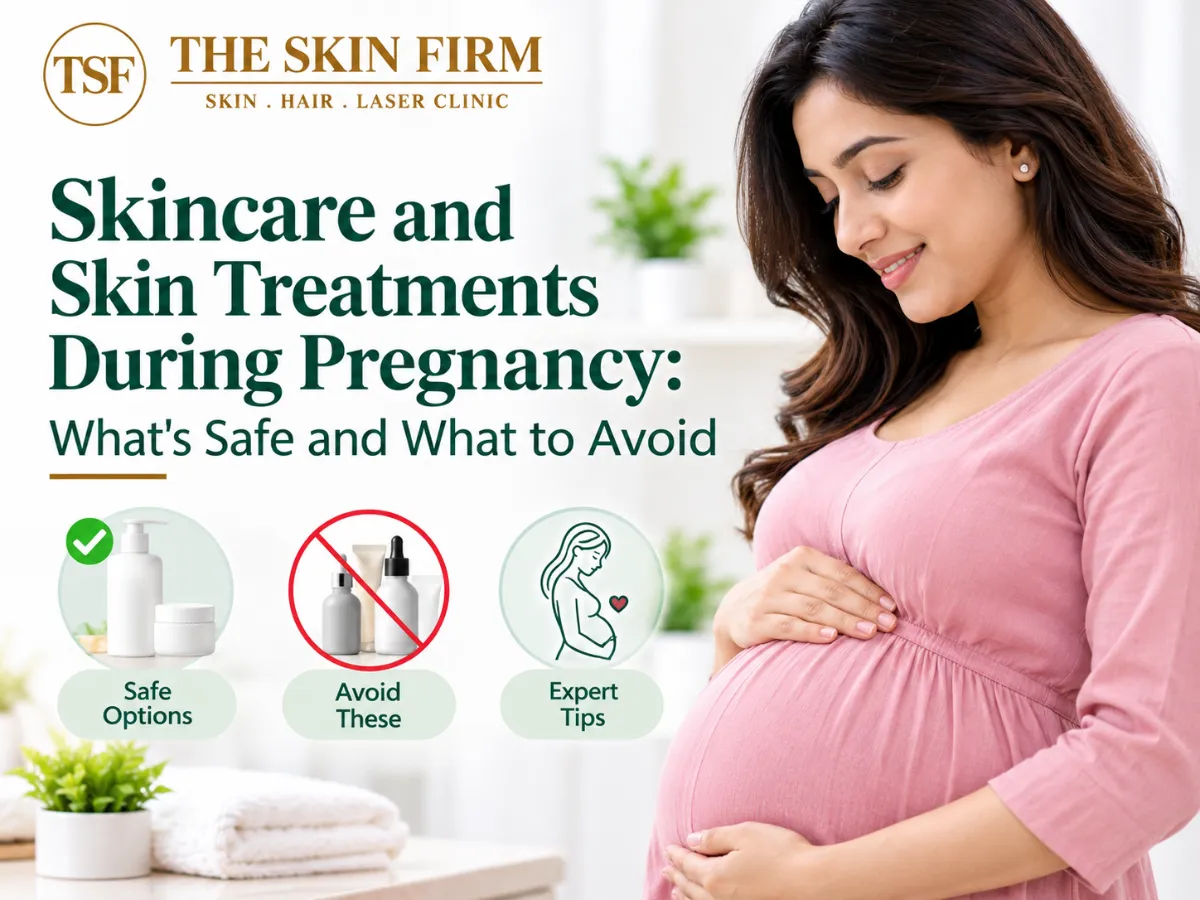
During pregnancy, a simple routine of gentle cleanser, moisturiser and mineral sunscreen is safe for almost everyone. Avoid retinoids (including retinol and tretinoin) and oral isotretinoin, and check with your doctor before using hydroquinone, high-strength acids or any prescription product. Most cosmetic procedures, such as laser hair removal, injectables, microneedling and deeper peels, are usually postponed until after pregnancy. Always tell your doctor you're pregnant before any skin treatment.
Pregnancy brings many skin changes, from a "glow" to acne, dark patches and stretch marks. At the same time, many women aren't sure which of their usual products are still safe. This guide sorts common skincare ingredients and clinic treatments into safe, check-first and avoid, and explains how to manage common pregnancy skin problems. It doesn't replace advice from your obstetrician or dermatologist, who know your full history.
Why pregnancy changes your skin
Rising levels of oestrogen, progesterone and other hormones affect pigment, oil glands, blood vessels and hair growth. Common changes include:
- Melasma (chloasma): brown patches on the cheeks, forehead and upper lip, sometimes called the "mask of pregnancy"
- Darkening of the nipples, underarms, inner thighs and a dark line down the abdomen (linea nigra)
- Acne, especially in the first trimester
- Stretch marks on the abdomen, breasts and thighs
- Spider veins and redness on the face and upper body
- Skin tags, often on the neck and underarms
- Thicker hair during pregnancy, followed by shedding after delivery
Most of these improve after delivery, though some, such as melasma and stretch marks, can persist.
Skincare ingredients during pregnancy: safe, check first, avoid
- Gentle cleansers and fragrance-free moisturisers: Check with your doctor first: Hydroquinone (more of it is absorbed than many ingredients); Avoid during pregnancy: Oral isotretinoin (causes serious birth defects)
- Glycerin, hyaluronic acid, ceramides: Check with your doctor first: Kojic acid and other pigment-lightening agents; Avoid during pregnancy: Topical retinoids: tretinoin, adapalene, tazarotene and retinol
- Mineral sunscreens (zinc oxide, titanium dioxide): Check with your doctor first: Salicylic acid in high-strength peels or large areas; Avoid during pregnancy: Oral tetracycline antibiotics (doxycycline, minocycline)
- Azelaic acid: Check with your doctor first: Topical antibiotics for acne (prescribed); Avoid during pregnancy: Oral tranexamic acid for melasma
- Low-strength glycolic or lactic acid: Check with your doctor first: Benzoyl peroxide (often allowed in limited amounts); Avoid during pregnancy: Unprescribed steroid or "fairness" creams
- Niacinamide, vitamin C: Check with your doctor first: Essential oils in high concentration; Avoid during pregnancy: Formaldehyde-based hair smoothening treatments
This table reflects common guidance, including from the American College of Obstetricians and Gynecologists and dermatology reviews. Guidance can differ for individual women, so check your products with your doctor, and bring the actual packs to your appointment if you can.
Pregnancy acne: what's safe
Acne often flares in early pregnancy. Options doctors commonly consider include:
- A gentle cleanser twice daily and an oil-free moisturiser
- Azelaic acid, which is commonly used in pregnancy
- Benzoyl peroxide or low-strength salicylic acid washes in limited amounts, if your doctor agrees
- Prescribed topical antibiotics in some cases
Avoid isotretinoin and topical retinoids, including over-the-counter retinol serums. If you were using these before you knew you were pregnant, don't panic, but stop and tell your doctor.
Pigmentation and melasma during pregnancy
Melasma is very common in Indian women during pregnancy, and sun exposure makes it darker. During pregnancy the focus is on preventing it from getting worse:
- 1. Daily mineral sunscreen (SPF 30 or higher), reapplied every few hours outdoors
- 2. Physical sun protection: a wide-brimmed hat, umbrella or dupatta in strong sun
- 3. Gentle skincare to avoid irritation, which can darken patches
- 4. Azelaic acid or other options your doctor considers safe, if treatment is needed
Many women notice melasma fades in the months after delivery. If it persists, more treatment options become available after pregnancy and breastfeeding. Our pigmentation and melasma treatment page explains what's possible.
Stretch marks
Stretch marks are common and largely influenced by genetics, weight gain and how quickly the skin stretches. Keeping the skin moisturised can make it more comfortable and may help a little, but no cream has been proven to prevent stretch marks completely. Our guide to stretch marks during and after pregnancy covers prevention and treatment options after delivery.
Hair fall during pregnancy
Most women find their hair thicker during pregnancy and lose more hair after delivery. Hair fall during pregnancy itself is less common and can point to low iron, low vitamin D, thyroid changes or a recent illness. Tell your obstetrician, who may check your blood levels. Hair fall after delivery is covered in our guide to postpartum skin, hair and body changes.
Clinic treatments during pregnancy
Research on cosmetic procedures in pregnancy is limited, because pregnant women are rarely included in trials. For that reason, most elective cosmetic treatments are postponed. A dermatology review of procedures in pregnancy summarises the cautious approach most doctors follow.
- Laser hair removal: Usually postponed. No proven harm, but there's not enough safety data, and hormonal hair often settles after delivery
- Botulinum toxin and fillers: Avoided
- Microneedling, radiofrequency and resurfacing lasers: Usually postponed
- Superficial peels (glycolic or lactic): Some doctors consider mild peels later in pregnancy; deeper peels are avoided
- HydraFacial and medi-facials: May be possible with pregnancy-safe products and without active serums such as retinoids. Discuss with your doctor
- Mole or skin tag removal: Usually postponed unless a lesion needs checking; changing moles should still be examined
- Hair spa and conditioning: Generally fine; avoid strong fragrances if they make you nauseous
- Hair colouring: Often advised to wait until after the first trimester, use a well-ventilated area and do a patch test
- Keratin or smoothening treatments: Avoid formaldehyde-releasing products
If you'd like a treatment that is usually postponed, a consultation can help you plan it for after delivery and breastfeeding. Planning a HydraFacial with suitable products, or simply a gentle skincare routine, can be a good alternative in the meantime.
Skin changes you may notice, trimester by trimester
- First (weeks 1–12): Common changes: Acne flares, oily skin, sensitivity to smells and products; What helps: Gentle cleanser, oil-free moisturiser, fragrance-free products
- Second (weeks 13–27): Common changes: Melasma and darkening of underarms, neck and linea nigra; the "glow" from increased blood flow; What helps: Daily mineral sunscreen, sun avoidance, moisturiser
- Third (weeks 28–40): Common changes: Stretch marks, itchy stretched skin, skin tags, swelling; What helps: Rich body moisturiser, loose clothing; report intense palm and sole itching promptly
Not everyone gets all of these, and timing varies. A change that worries you is always worth mentioning at your antenatal check-up.
Myths about skincare in pregnancy
"All natural products are safe in pregnancy." "Natural" doesn't mean safe. Some essential oils and herbal extracts can irritate skin or haven't been studied in pregnancy.
"Sunscreen chemicals harm the baby." Mineral sunscreens are a commonly recommended choice if you're concerned. Sun protection matters, especially for melasma.
"Pregnancy acne means the baby is a girl (or a boy)." Acne is driven by hormones in the mother and doesn't predict the baby's sex.
"I have to stop all skincare while pregnant." A gentle routine is safe and helpful. It's specific ingredients and procedures that need care.
"Melasma from pregnancy is permanent." It often fades after delivery, especially with sun protection, though some women need treatment later.
Questions to ask before any skin treatment while pregnant
Whether you're visiting a clinic, a salon or a pharmacy, these questions help you make a safe choice:
- 1. Has this treatment or ingredient been studied in pregnancy, and what does the evidence say?
- 2. Is there a gentler option that gives most of the benefit with less uncertainty?
- 3. Can it wait until after delivery or breastfeeding without the problem getting worse?
- 4. Are any of the serums, masks or add-ons in this treatment ones I should avoid, such as retinoids or strong acids?
- 5. Is the person treating me aware that I'm pregnant, and how many weeks along I am?
- 6. What should I do if I have a reaction afterwards?
If you're not sure, it's reasonable to wait. Most cosmetic concerns can be treated safely after pregnancy, while a simple, gentle routine keeps skin comfortable in the meantime. Bringing your product packs to an appointment lets the doctor check every ingredient rather than guessing from a brand name.
Breastfeeding
Many of the same cautions continue while breastfeeding, though some treatments become possible. For example, certain topical treatments and some procedures may be considered, while oral isotretinoin and some other medicines remain unsuitable. Ask your doctor about each product or treatment, and tell every doctor you see that you're breastfeeding.
Warning signs: when itching or rashes need urgent care
Most pregnancy skin changes are harmless, but some need prompt medical attention:
- Intense itching, especially of the palms and soles, often worse at night, in the later months. This can be a sign of a liver condition called obstetric cholestasis. Contact your obstetrician promptly
- An itchy rash with blisters, particularly around the navel
- A widespread itchy rash that is affecting sleep
- A mole that is changing in size, shape or colour
- Signs of infection, such as hot, red, painful skin with fever
A simple pregnancy skincare routine
Morning: gentle cleanser, fragrance-free moisturiser, mineral sunscreen (SPF 30+).
Night: gentle cleanser, moisturiser, plus azelaic acid or another doctor-approved treatment if needed.
Body: a rich moisturiser on the abdomen, breasts and thighs after bathing.
Habits: lukewarm showers, loose cotton clothing, and sun protection outdoors.
When to see a doctor
- You're unsure whether a product you're using is safe
- Acne or pigmentation is getting worse despite gentle care
- You have intense itching, a rash or blisters
- A mole or spot is changing
- You want to plan treatments for after delivery
You can book a consultation at The Skin Firm, a skin, hair and laser clinic at NIBM Road, Pune. Please mention that you're pregnant or breastfeeding when you book, so the doctor can plan suitable advice.
References
- Skin conditions during pregnancy — American College of Obstetricians and Gynecologists
- Pregnancy skin care — American Academy of Dermatology
- Dermatologic and cosmetic procedures in pregnancy — Journal of Cutaneous and Aesthetic Surgery, 2022
- A review of the safety of cosmetic procedures during pregnancy and lactation — International Journal of Women's Dermatology, 2017
- Cutaneous changes during pregnancy: a comprehensive review — Cureus, 2024
This article is for general information and isn't a substitute for a medical consultation. Editorial note: drafted with AI assistance and medically reviewed before publication.