 Add as a preferred source on Google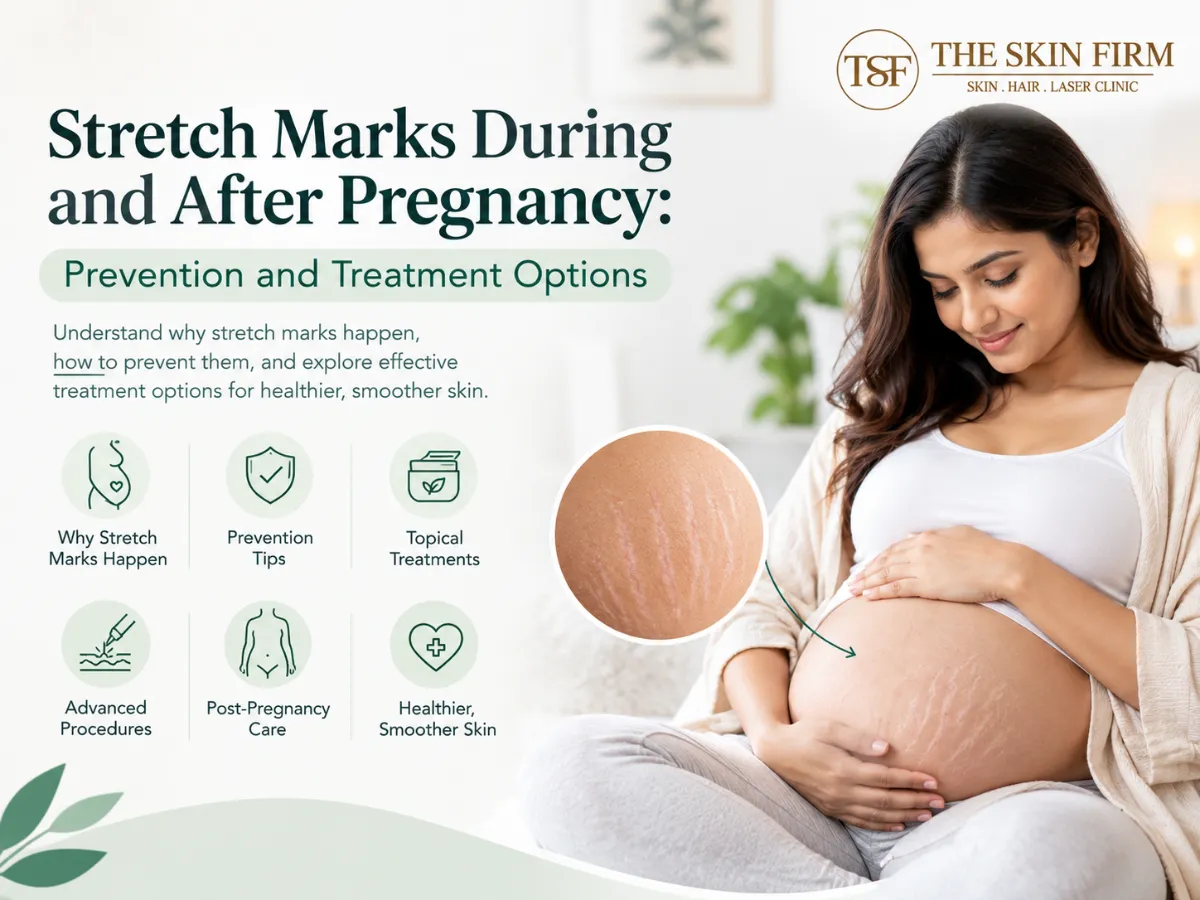
Stretch marks are one of the most common skin concerns among women during and after pregnancy, and few topics generate as much anxiety and misinformation online. If you are pregnant, planning a pregnancy, or navigating postpartum skin changes, you have likely already encountered dozens of conflicting claims about creams, oils, and treatments. At The Skin Firm — South Pune's best skin clinic and aesthetic clinic at NIBM Mohammed Wadi — Dr. Karishma Singh, skin specialist and aesthetic dermatologist, separates genuine prevention strategies from marketing myths, and explains the treatments that actually work once stretch marks have formed.
What Are Stretch Marks and Why Do They Form?
Stretch marks, medically known as striae, form when your skin stretches rapidly — as happens during pregnancy — faster than your dermis can produce enough collagen and elastin to keep pace. This rapid stretching causes the middle layer of skin to tear at a microscopic level, and as these tears heal, they form the streaky, discoloured lines we recognise as stretch marks.
During pregnancy, stretch marks most commonly appear on the abdomen, breasts, hips, and thighs — areas that experience the most significant stretching as your body changes over nine months. They typically begin as reddish, pink, or purplish lines (striae rubra) during pregnancy itself, gradually fading to a lighter, silvery-white colour (striae alba) over the months following delivery as the initial inflammation subsides.
Why Some Women Get Stretch Marks and Others Don't
- Genetics: Family history plays a significant role. If your mother experienced significant stretch marks during pregnancy, you are statistically more likely to as well, due to inherited skin collagen and elastin characteristics.
- Skin Elasticity: Naturally more elastic skin stretches without tearing as easily, while less elastic skin is more prone to developing visible striae under the same degree of stretching.
- Rate of Weight Gain: Rapid weight gain over a short period gives your skin less time to gradually adapt, increasing stretch mark likelihood compared to slower, more gradual weight changes.
- Multiple Pregnancies: Skin that has already stretched once may be more prone to developing additional stretch marks in subsequent pregnancies, as the connective tissue has less remaining elasticity.
- Hormonal Factors: Pregnancy hormones, particularly increased cortisol and relaxin, can reduce the skin's collagen production and elasticity, making it more vulnerable to tearing under stretch.
- Hydration and Skin Health: Well-hydrated, healthy skin generally tolerates stretching better than dry, poorly nourished skin, though hydration alone cannot fully prevent stretch marks in genetically predisposed individuals.
Prevention: What Actually Helps (and What Doesn't)
Despite countless products marketed as stretch mark prevention miracles, the honest clinical reality is more modest. No cream or oil can completely prevent stretch marks if you are genetically predisposed to them — prevention is about improving your odds and supporting overall skin health, not guaranteeing immunity.
Evidence-supported approaches include maintaining steady, gradual weight gain within the range recommended by your obstetrician, staying well hydrated throughout pregnancy, and using a good-quality moisturiser rich in ingredients like hyaluronic acid, centella asiatica, and shea butter to support skin elasticity from the outside. Regular gentle massage of at-risk areas may modestly improve local circulation and skin suppleness, though clinical evidence for dramatic prevention effects remains limited.
What does not work, despite popular belief: cocoa butter and vitamin E oil alone have not been shown in controlled studies to meaningfully prevent stretch marks, though they do provide general skin hydration. Expensive branded "stretch mark prevention" creams often contain similar core ingredients to much cheaper moisturisers — the price does not correlate with prevention effectiveness.
Treatment Options Once Stretch Marks Have Formed
- Topical Retinoids (Postpartum Only): Prescription-strength retinoids can improve the appearance of early-stage, still-reddish stretch marks by stimulating collagen production. These are not safe during pregnancy or breastfeeding and should only be used under dermatologist guidance after this period.
- Chemical Peels: Superficial peels can improve skin texture around stretch marks and are sometimes combined with other treatments for a more comprehensive improvement in overall skin appearance.
- Microneedling: Fine needles create controlled micro-injuries that stimulate collagen and elastin production, gradually improving the texture and depth of established stretch marks over a series of sessions.
- Laser Treatment: Fractional laser resurfacing can significantly improve the appearance of both red and white stretch marks by stimulating collagen remodelling and improving skin texture, often producing more visible results than topical treatments alone.
- Radiofrequency Microneedling: Combines microneedling with radiofrequency energy for deeper collagen stimulation, often recommended for more established, silvery stretch marks that have proven resistant to topical treatment.
Timing Matters: When to Start Treatment
Stretch marks respond best to treatment while they are still in their early, reddish stage, when increased blood supply to the area means treatments can more effectively influence the healing and collagen remodelling process. This does not mean older, silvery stretch marks cannot improve — they can, particularly with laser and microneedling treatments — but results are typically more gradual and may require more sessions.
For new mothers at The Skin Firm, Dr. Karishma Singh typically recommends waiting until breastfeeding is complete before beginning more intensive treatments like retinoids or certain laser protocols, ensuring both safety and the best possible treatment response. Gentle options like superficial peels and basic skin support can often begin sooner, depending on individual circumstances discussed at consultation.
What Results Can You Realistically Expect?
Setting honest expectations is important: no treatment completely erases stretch marks, and any clinic promising full removal is overstating what current dermatological science can deliver. What consistent, properly administered treatment can achieve is a genuine, visible improvement in texture, colour, and overall prominence — often reducing their visibility significantly enough that they are far less noticeable in daily life and in clothing choices that previously felt limited.
Most patients at The Skin Firm undergoing a combination approach (such as microneedling paired with a supportive topical routine) notice meaningful improvement over 4 to 6 sessions, spaced several weeks apart, with results continuing to develop for months afterward as new collagen continues forming beneath the surface.
Why Choose The Skin Firm for Stretch Mark Treatment
Stretch mark treatment requires patience, realistic expectations, and a dermatologist who tailors the approach to your specific stretch mark stage — whether fresh and reddish or older and silvery. At The Skin Firm, Dr. Karishma Singh assesses your stretch marks individually before recommending microneedling, laser resurfacing, chemical peels, or a combination approach, always considering your postpartum time
line and breastfeeding status. Many new mothers combine stretch mark treatment with our broader pre and post-pregnancy skin care offerings — more at theskinfirm.in/stretch-marks-removal-treatment-in-pune/ and, for brides preparing for their wedding, theskinfirm.in/pre-wedding-services/.
Book Your Stretch Mark Consultation at The Skin Firm
Whether you are currently pregnant and want genuine, evidence-based prevention guidance, or you are postpartum and ready to address established stretch marks, The Skin Firm offers a personalised, honest approach. Book your consultation at South Pune's best aesthetic clinic today.
Book Your Consultation at The Skin Firm
Ready to start your skin care journey? Visit The Skin Firm — South Pune's best skin clinic — for personalised skin care treatments by our expert skin specialists.
Contact The Skin Firm
- 1st Floor, Society Gate 1, Plot no.1, NIBM Post Office Rd, opp. Tribeca Highstreet, Mohammed Wadi, Pune 411060
- +91 8308669966
- hello@theskinfirm.in
- Tuesday – Sunday: 10:00 AM – 8:00 PM | Monday: Closed
- Appointment Policy: Please arrive 15 minutes early. 24-hour cancellation notice required.
- theskinfirm.in