 Add as a preferred source on Google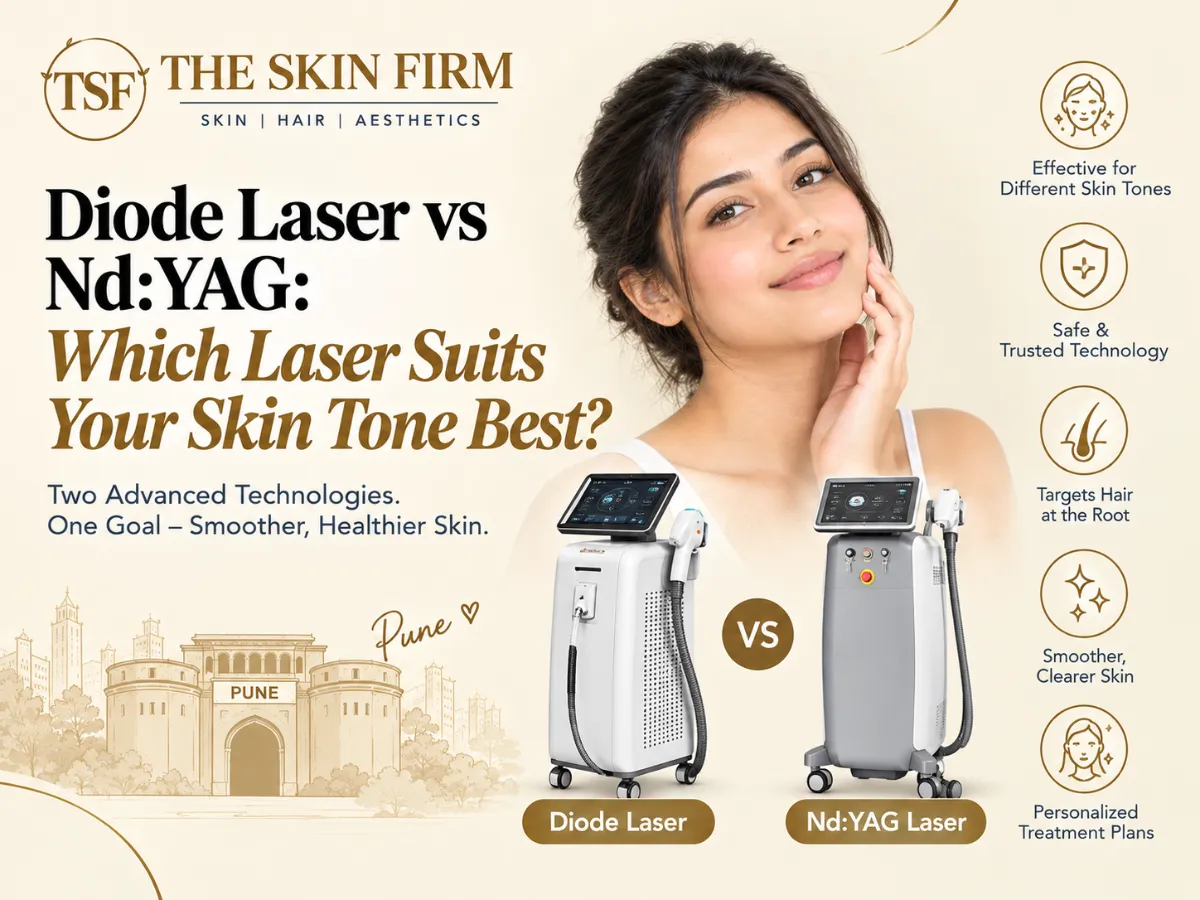
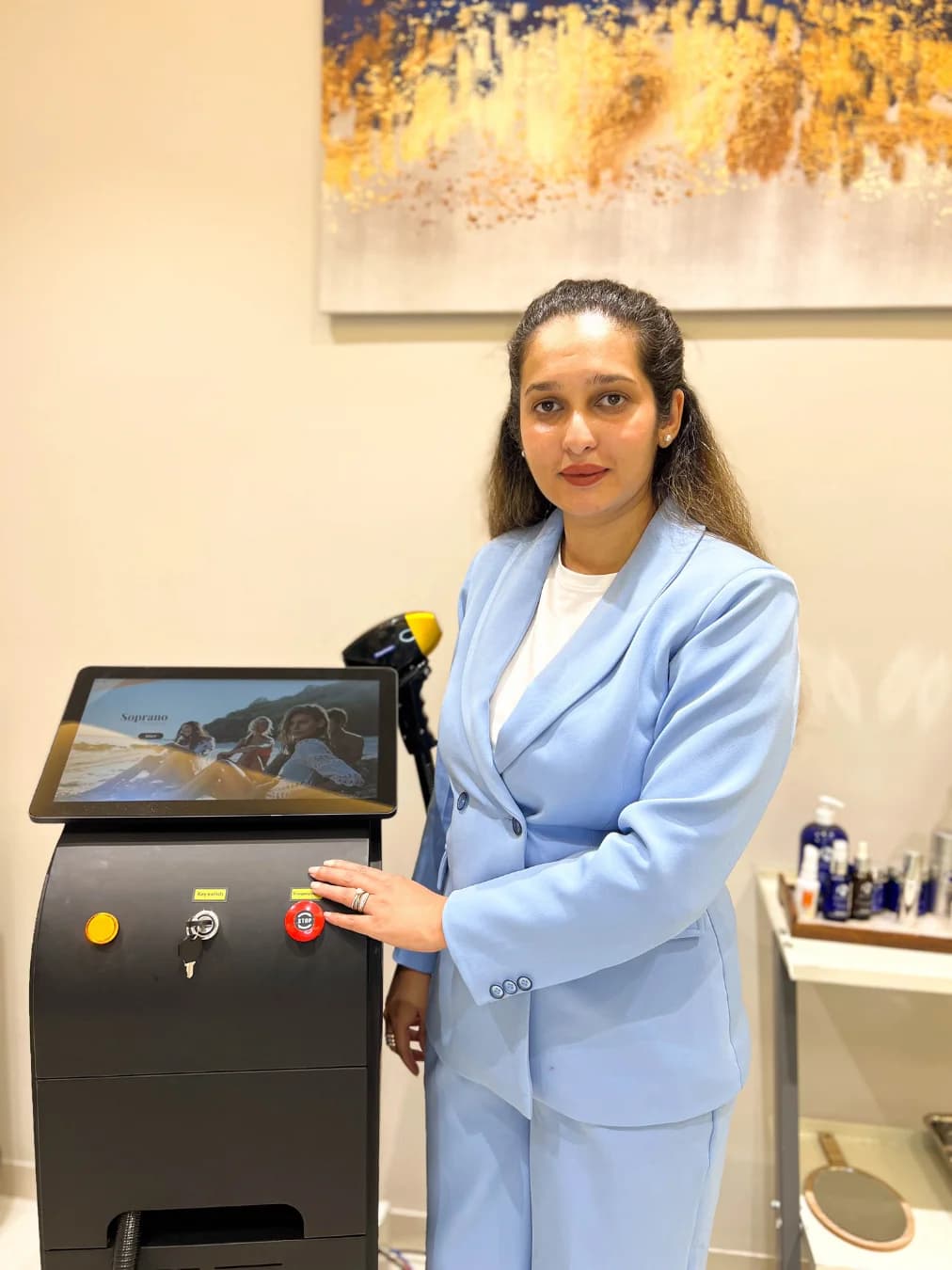
Not all laser hair removal technology is the same, and the specific wavelength used matters significantly for how safely and effectively it works on your particular skin tone. If you have researched laser hair removal and encountered both "Diode" and "Nd:YAG" mentioned as different laser types, understanding the distinction genuinely matters for your results. At The Skin Firm — South Pune's best skin clinic and aesthetic clinic at NIBM Mohammed Wadi — Dr. Karishma Singh, skin specialist and aesthetic dermatologist, explains which laser suits your specific skin tone best.
How Laser Hair Removal Works: The Basic Science
All laser hair removal technology operates on the same fundamental principle: targeting melanin (pigment) within the hair follicle with a specific wavelength of light, which the follicle absorbs as heat energy, damaging its ability to produce new hair. The critical variable across different laser types is the specific wavelength used, because different wavelengths penetrate skin to different depths and interact differently with the melanin present in both your hair and your surrounding skin.
This is precisely why laser type matters enormously for darker skin tones — a wavelength that cannot adequately distinguish between hair follicle melanin and surrounding skin melanin risks affecting the skin itself, potentially causing burns or pigmentation changes, rather than safely and selectively targeting only the hair follicle.
Diode Laser: Characteristics and Best Use Cases
Diode laser operates at approximately 800-810nm wavelength, offering a strong balance between effective melanin absorption and reasonably good penetration depth. It has become one of the most widely used laser types globally for hair removal, valued for its efficiency and generally good tolerance across a range of skin tones, particularly fair to medium (Fitzpatrick Types I-IV).
Diode laser generally works quickly per session and is highly effective for coarse, dark hair on lighter-to-medium skin tones. Its slightly shorter wavelength compared to Nd:YAG means it can be marginally less optimal for very dark skin tones specifically, where a longer wavelength provides an additional safety margin against affecting surrounding skin pigment.
Nd:YAG Laser: Characteristics and Best Use Cases
Nd:YAG laser operates at a longer 1064nm wavelength, which penetrates deeper into the skin while being less strongly absorbed by superficial skin melanin compared to shorter wavelengths. This characteristic makes Nd:YAG the generally preferred, safer option for darker skin tones (Fitzpatrick Types IV-VI), including the majority of Indian skin tones, since the longer wavelength more effectively bypasses surface skin pigment to target the follicle itself with reduced risk of affecting surrounding skin.
The trade-off is that Nd:YAG can require slightly more sessions or higher energy settings to achieve the same hair reduction results compared to Diode on lighter skin, since its longer wavelength interacts somewhat less efficiently with hair follicle melanin specifically. For darker-skinned patients, however, this trade-off is entirely worthwhile given the significantly improved safety profile.
Direct Comparison: Diode vs Nd:YAG
- Wavelength: Diode — approximately 800-810nm. Nd:YAG — 1064nm, notably longer.
- Best Suited Skin Tones: Diode — fair to medium skin tones (Fitzpatrick I-IV). Nd:YAG — medium to dark skin tones (Fitzpatrick IV-VI), including most Indian skin.
- Penetration Depth: Diode — moderate. Nd:YAG — deeper, reaching follicles at greater depth beneath the surface.
- Efficiency on Coarse, Dark Hair: Diode — highly efficient. Nd:YAG — effective, though may require marginally more sessions for equivalent results on lighter-skinned patients.
- Safety Margin for Dark Skin: Diode — good, though Nd:YAG offers an additional safety margin. Nd:YAG — considered the gold standard for darker skin tones specifically.
- Typical Session Comfort: Both lasers, when equipped with modern cooling technology, offer generally comfortable treatment, described as a warm snapping sensation.
Why This Matters Specifically for Indian Skin Tones
Indian skin tones span a considerable range, from Fitzpatrick Type III through Type V and occasionally VI, meaning the appropriate laser choice genuinely varies by individual rather than following a single blanket recommendation. Patients with lighter Indian skin tones may tolerate and respond excellently to Diode laser, while patients with deeper skin tones typically achieve both safer and more effective results with Nd:YAG.
This is precisely why a proper skin assessment before treatment matters more than choosing a clinic simply based on which single laser type they happen to own. At The Skin Firm, we offer both Diode and Nd:YAG laser systems specifically so that Dr. Karishma Singh can select the appropriate technology for your individual skin tone, rather than applying a one-size-fits-all approach regardless of what your skin actually needs for safe, effective treatment.
Can Both Lasers Be Used on the Same Patient?
Yes, and this happens more often than many patients realise. Some individuals have naturally varying skin tones across different body areas — for example, slightly lighter skin on the arms compared to more sun-exposed areas like the face or underarms. In these cases, your dermatologist may recommend Diode for one area and Nd:YAG for another, tailoring the technology to each specific zone rather than applying a single laser type across your entire treatment plan.
This flexibility is a genuine advantage of choosing a clinic equipped with multiple laser technologies rather than one offering only a single laser type regardless of patient need.
What Happens If the Wrong Laser Is Used for Your Skin Tone?
Using a laser wavelength poorly matched to your skin tone carries genuine risks. If a shorter-wavelength laser is used at inappropriately high settings on darker skin, the surrounding skin can absorb excessive energy, potentially causing burns, blistering, or post-inflammatory hyperpigmentation — a particularly frustrating outcome given the patient sought treatment to improve their skin, not create a new pigmentation concern.
This risk underscores why choosing a dermatologist-supervised clinic with properly trained staff matters significantly more for laser hair removal than many patients initially realise. Equipment quality alone does not guarantee safety — correct technology selection and appropriately calibrated settings for your specific skin tone are what actually determine your treatment's safety and effectiveness. Learn more about our approach to laser hair removal safety specifically at theskinfirm.in/blogs/is-laser-hair-removal-safe-for-indian-skin/, and explore our full service at theskinfirm.in/diode-laser-hair-removal-in-pune/.
Why Choose The Skin Firm for Laser Hair Removal
At The Skin Firm, we deliberately maintain both Diode and Nd:YAG laser systems specifically so that Dr. Karishma Singh can recommend the technology genuinely suited to your individual skin tone, rather than limiting every patient to whichever single laser a clinic happens to have invested in.
Book Your Laser Hair Removal Consultation at The Skin Firm
Choosing the right laser technology for your skin tone matters for both safety and results. Book your consultation at The Skin Firm — South Pune's best aesthetic clinic — for a personalised laser hair removal assessment.
Book Your Consultation at The Skin Firm
Ready to start your skin care journey? Visit The Skin Firm — South Pune's best skin clinic — for personalised skin care treatments by our expert skin specialists.
Contact The Skin Firm
- 1st Floor, Society Gate 1, Plot no.1, NIBM Post Office Rd, opp. Tribeca Highstreet, Mohammed Wadi, Pune 411060
- +91 8308669966
- hello@theskinfirm.in
- Tuesday – Sunday: 10:00 AM – 8:00 PM | Monday: Closed
- Appointment Policy: Please arrive 15 minutes early. 24-hour cancellation notice required.
- theskinfirm.in