 Add as a preferred source on Google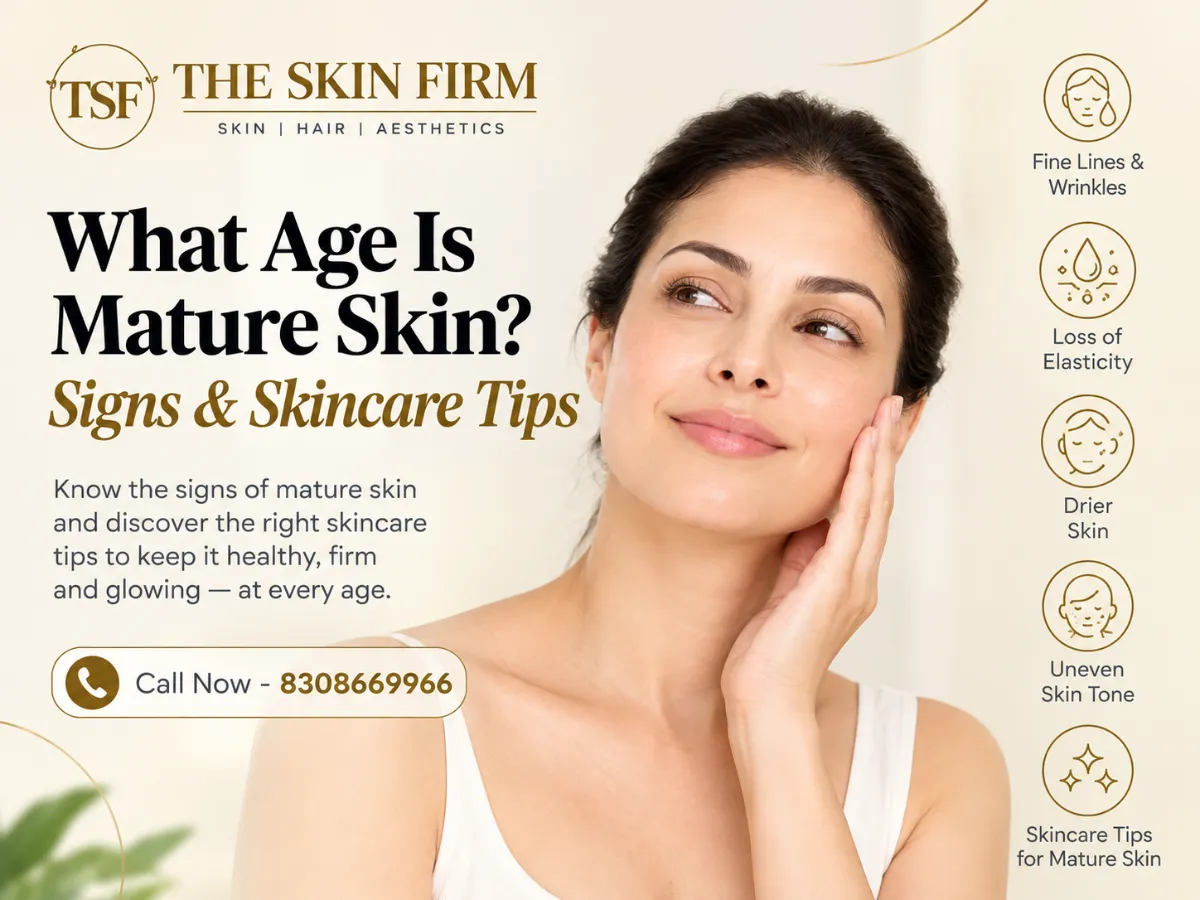
"Mature skin" is a term used constantly in skincare marketing, but rarely defined with any real precision — leaving many people unsure whether it applies to them, and at what age they should genuinely start thinking about it. At The Skin Firm — South Pune's best skin clinic and aesthetic clinic at NIBM Mohammed Wadi — Dr. Karishma Singh, skin specialist and aesthetic dermatologist, explains what mature skin actually means from a dermatological perspective, and the real signs to watch for rather than relying on age alone.
This article focuses specifically on recognising mature skin and adjusting your routine accordingly. If you're specifically wondering when to begin active anti-ageing treatments, our companion piece at theskinfirm.in/blogs/what-age-should-you-start-anti-aging-treatments/ addresses that treatment-timing question directly — read both for a complete picture of this stage of skin ageing.
Why Age Alone Doesn't Define 'Mature Skin'
Dermatologically, "mature skin" refers to a specific set of biological changes — reduced collagen and elastin production, slower cellular turnover, decreased oil gland activity, and reduced barrier function — rather than a fixed birthday milestone. While these changes statistically become more common and pronounced from the mid-30s onward, the actual timeline varies enormously based on genetics, sun exposure history, skincare habits, hormonal factors, and overall health.
This is why two people of the identical chronological age can have meaningfully different skin maturity levels — one might show clear signs of mature skin in their early 30s due to significant unprotected sun exposure, while another maintains a more youthful skin profile well into their 40s due to consistent sun protection and skincare habits over decades.
The Real Signs of Mature Skin to Watch For
- Reduced Skin Elasticity: Skin takes noticeably longer to bounce back when gently pinched or stretched, a direct reflection of declining elastin production.
- Increased Dryness and Dehydration: Reduced oil gland activity means skin that was previously normal or oily may begin feeling drier, requiring richer moisturisation than before.
- Fine Lines That Persist at Rest: Expression lines that previously disappeared when your face was relaxed begin remaining visible even without active muscle movement.
- Slower Cell Turnover: Skin appears duller and takes longer to recover from irritation or blemishes, reflecting the natural slowdown in cellular renewal rate with age.
- Thinning Skin Texture: Skin may appear and feel thinner, with underlying blood vessels sometimes becoming more visible, particularly around the cheeks and hands.
- Changes in Pigmentation Patterns: Sun spots and uneven pigmentation from cumulative UV exposure often become more visible as skin's natural repair mechanisms slow down.
How Mature Skin Differs by Individual Factors
Genetics plays a substantial role in when these changes become noticeable — family history of early or late visible ageing is often a reasonably reliable predictor for your own timeline. Cumulative sun exposure throughout your life, particularly unprotected exposure during your teens and 20s, significantly accelerates the biological ageing process, sometimes causing mature skin characteristics to appear years earlier than genetics alone would predict.
Hormonal changes, particularly the decline in oestrogen during perimenopause and menopause, also significantly accelerate several mature skin characteristics simultaneously — reduced collagen, increased dryness, and reduced elasticity often all become more pronounced during this specific hormonal transition, somewhat independent of chronological age alone.
How Your Skincare Routine Should Adapt for Mature Skin
- Prioritise Richer Hydration: As oil production declines, switching from lightweight, gel-based moisturisers to richer, more emollient formulations helps address increased dryness and support the compromised skin barrier.
- Introduce or Continue Retinoids: If not already part of your routine, retinol becomes increasingly valuable for mature skin, supporting collagen production and cellular turnover that naturally slows with age.
- Focus on Barrier Support: Ingredients like ceramides and ceramide-supporting formulations become more important as mature skin's natural barrier function declines, making it more vulnerable to irritation and moisture loss.
- Increase Gentle Exfoliation: Slower natural cell turnover means gentle, regular exfoliation (chemical rather than harsh physical scrubs) becomes more important for maintaining radiance and allowing other products to penetrate effectively.
- Never Compromise on Sun Protection: Mature skin has reduced capacity to repair UV damage, making consistent, high-SPF sun protection even more critical than in younger skin.
When Professional Treatment Becomes Worth Considering
Once you notice several mature skin characteristics developing together, this is typically a reasonable point to consider professional dermatological support alongside your home routine. Treatments like chemical peels, microneedling, and other collagen-stimulating procedures can meaningfully accelerate improvement beyond what topical products alone achieve, particularly once natural collagen decline has become noticeable.
At The Skin Firm, Dr. Karishma Singh assesses your specific combination of mature skin signs — rather than your age alone — to recommend an appropriately timed and tailored treatment approach. Explore our full anti-ageing treatment options at theskinfirm.in/anti-ageing-treatment-in-pune/.
Embracing Mature Skin While Supporting Its Health
It's worth noting that "mature skin" is not a problem to be feared or reversed entirely — it's a natural biological stage that every person's skin eventually reaches. The goal of adapting your routine and considering professional treatment isn't to erase this natural progression, but to support your skin's health, comfort, and appearance as it changes, addressing genuine concerns like excessive dryness or significant collagen loss rather than pursuing an unrealistic standard of permanently unchanged skin.
Dr. Karishma Singh's approach at The Skin Firm centres on this same philosophy — helping your skin be as healthy and comfortable as possible at every life stage, rather than promoting an unattainable, ageless ideal that no skincare routine or treatment can genuinely deliver.
Why Choose The Skin Firm for Mature Skin Care
Understanding your specific mature skin signs — rather than assuming based on age alone — allows for a genuinely personalised approach to both home routine and professional treatment. At The Skin Firm, Dr. Karishma Singh evaluates your individual skin's specific characteristics before recommending any changes to your routine or treatment plan.
Book Your Skin Assessment at The Skin Firm
Whether you're noticing early signs of mature skin or want a professional assessment of your skin's current needs, The Skin Firm offers a personalised evaluation. Book your consultation at South Pune's best aesthetic clinic today.
Book Your Consultation at The Skin Firm
Ready to start your skin care journey? Visit The Skin Firm — South Pune's best skin clinic — for personalised skin care treatments by our expert skin specialists.
Contact The Skin Firm
- 1st Floor, Society Gate 1, Plot no.1, NIBM Post Office Rd, opp. Tribeca Highstreet, Mohammed Wadi, Pune 411060
- +91 8308669966
- hello@theskinfirm.in
- Tuesday – Sunday: 10:00 AM – 8:00 PM | Monday: Closed
- Appointment Policy: Please arrive 15 minutes early. 24-hour cancellation notice required.
- theskinfirm.in