 Add as a preferred source on Google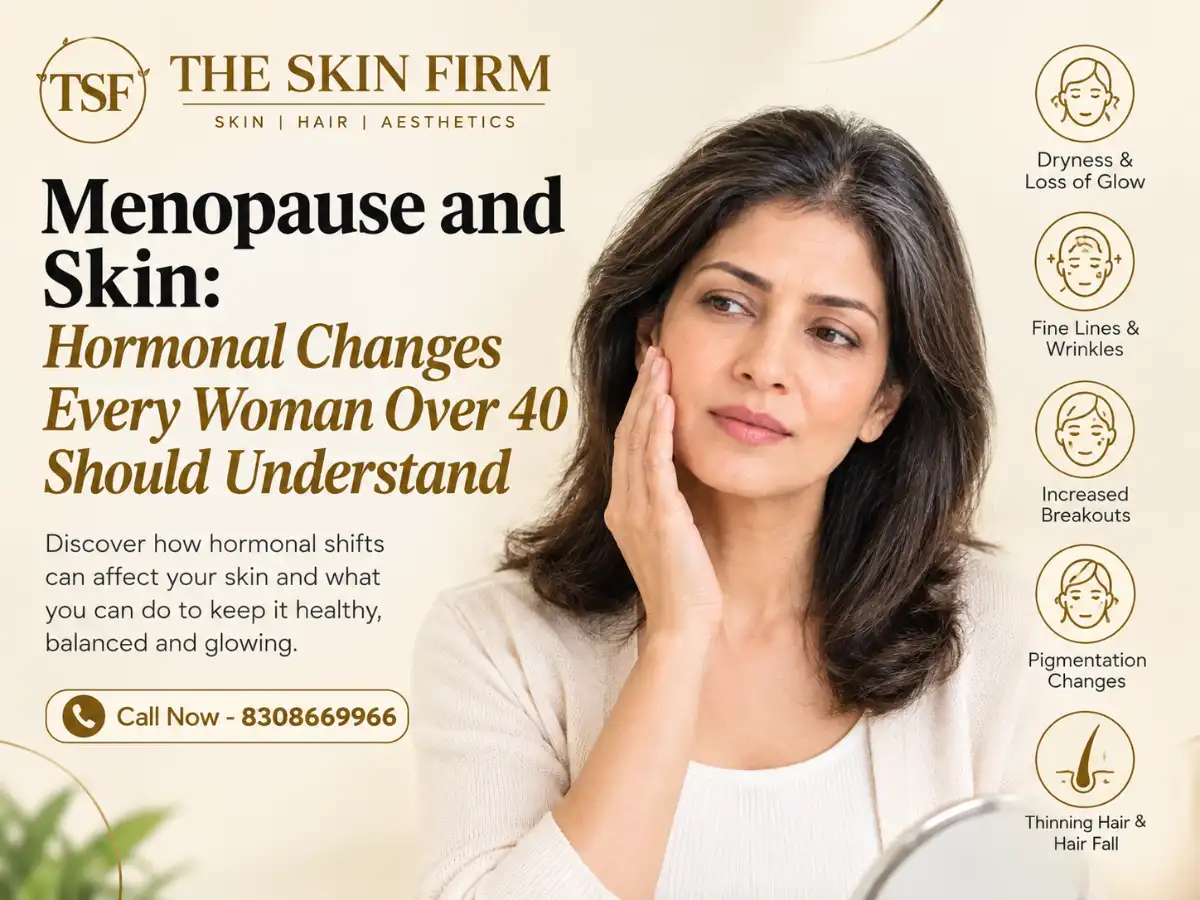
Menopause brings well-documented changes — hot flashes, mood shifts, sleep disruption — but its effects on skin and hair receive far less attention despite being genuinely significant and, importantly, genuinely manageable with the right understanding and approach. At The Skin Firm — South Pune's best skin clinic and aesthetic clinic at NIBM Mohammed Wadi — Dr. Karishma Singh, skin specialist and aesthetic dermatologist, explains exactly what happens to skin and hair during this transition, and what genuinely helps.
The Hormonal Shift Driving Menopausal Skin Changes
Oestrogen plays a genuinely significant role in skin health throughout your reproductive years, supporting collagen production, skin thickness, and moisture retention. As oestrogen levels decline during perimenopause and menopause, these supportive effects diminish correspondingly, producing changes that many women notice occurring more rapidly than the gradual ageing they experienced in their 30s and early 40s.
Research indicates that women can lose a significant percentage of their skin's collagen in the first few years following menopause, considerably faster than the collagen decline associated with chronological ageing alone. This explains why many women describe menopausal skin changes as feeling sudden or accelerated, rather than a continuation of the gradual changes they had already grown accustomed to.
Skin Changes: Dryness, Thinning, and Reduced Elasticity
Reduced oestrogen directly decreases your skin's natural oil production, often causing skin that was previously normal or even oily to become noticeably drier during menopause — a change that surprises many women who haven't dealt with dry skin since childhood. This increased dryness often comes with increased sensitivity, with products previously well-tolerated sometimes causing new irritation.
Skin thinning is another genuine, measurable change, making skin more fragile and prone to bruising or tearing with minor trauma. Reduced elasticity, from declining collagen and elastin, contributes to more pronounced sagging and the appearance of fine lines becoming more visible than the same lines appeared in your 30s and early 40s, even without additional new damage occurring.
Hair Changes During Menopause
Hair thinning during menopause reflects the same hormonal shift affecting skin, with declining oestrogen allowing androgen effects to become relatively more prominent, sometimes triggering androgenetic hair thinning that wasn't previously apparent. This typically presents as gradually reduced hair density, particularly at the crown and part line, rather than the more dramatic hair loss patterns seen in other conditions.
Some women also notice changes in hair texture during this transition — hair that was previously manageable becoming drier, more brittle, or harder to style, reflecting the same reduced oil production affecting facial skin extending to the scalp and hair shaft as well.
Increased Pigmentation and Age Spots
Many women notice new or more prominent brown spots and uneven pigmentation during menopause, partly reflecting cumulative sun exposure over decades finally becoming visible as skin's natural repair mechanisms slow with age, and partly reflecting hormonal influences on melanin production during this transition specifically.
This is precisely the stage where consistent sun protection, if not already a lifelong habit, becomes genuinely essential — menopausal skin has reduced capacity to repair UV damage, meaning new sun exposure during this period causes more visible, longer-lasting pigmentation than the same exposure would have caused at a younger age.
Adjusting Your Skincare Routine for Menopausal Skin
- Switch to Richer, More Emollient Moisturisers: Lightweight, gel-based products suited to younger or oilier skin often no longer provide sufficient hydration for menopausal skin's changed needs.
- Introduce or Continue Retinoids: Retinol supports collagen production that naturally declines during this period, making it increasingly valuable rather than optional at this life stage.
- Prioritise Barrier-Supporting Ingredients: Ceramides and similar barrier-supporting formulations become more important as skin's natural protective function diminishes with reduced oil production.
- Never Skip Sunscreen: With reduced capacity to repair UV damage, consistent, high-SPF sun protection matters more than at any previous life stage.
- Consider Gentler Cleansing: Harsher cleansers that were tolerable on oilier younger skin may now strip already-compromised menopausal skin, worsening dryness and sensitivity.
Professional Treatments That Genuinely Help
Chemical peels support cellular turnover that naturally slows with age, helping address both dullness and pigmentation concerns common during menopause. Microneedling and microneedling RF stimulate genuine collagen production, directly addressing the accelerated collagen loss characteristic of this life stage, often with more noticeable impact than the same treatment would produce on younger skin with less dramatic decline to address.
For hair thinning specifically, PRP therapy, GFC therapy, or hair mesotherapy can meaningfully support follicle health during this hormonally-influenced transition. Explore theskinfirm.in/anti-ageing-treatment-in-pune/ and theskinfirm.in/hair-loss-treatment-in-pune/ for these targeted options.
Hot Flashes and Their Effect on Skin Sensitivity
Hot flashes, beyond their obvious discomfort, can genuinely increase skin sensitivity and reactivity during menopause, as repeated episodes of rapid flushing and temperature change stress an already compromised skin barrier. Some women notice their skin becomes more reactive to products or environmental factors specifically during periods of frequent hot flashes, requiring temporarily gentler skincare during these episodes.
Keeping your skincare routine simple and consistent during particularly symptomatic periods, rather than introducing new products when your skin is already managing hormonal fluctuation stress, generally produces better outcomes than experimenting with new treatments during your most symptomatic weeks.
The Emotional Dimension of Menopausal Skin Changes
Visible skin and hair changes during menopause often arrive alongside other significant life transitions — children leaving home, career shifts, ageing parents — compounding their emotional impact beyond the physical changes alone. Many women describe menopausal skin changes as feeling like an unwelcome, additional adjustment during an already transitional period, rather than a simple cosmetic concern to dismiss.
At The Skin Firm, we recognise that supporting your skin and hair through this transition genuinely matters for your overall confidence and wellbeing during a life stage that already demands considerable emotional adjustment. Dr. Karishma Singh approaches these consultations with this broader context in mind, not treating your concerns as purely cosmetic or secondary.
Nutrition and Lifestyle Support During This Transition
While no diet reverses hormonal skin changes, certain nutritional factors genuinely support skin health during menopause. Adequate protein intake supports the collagen production your body is already struggling to maintain, while omega-3 fatty acids from sources like fish or flaxseed support skin barrier function that's simultaneously weakening due to reduced oil production.
Regular exercise, beyond its broader health benefits during menopause, supports circulation that delivers nutrients to skin more effectively, while adequate hydration helps offset some of the dryness-related changes discussed earlier. None of these lifestyle factors reverse menopausal changes entirely, but they meaningfully support whatever professional treatment approach you choose alongside them.
When to See a Dermatologist During Menopause
While gradual skin and hair changes are an expected part of this transition, sudden or dramatic changes — rapid hair loss, new and rapidly changing skin lesions, or severe, persistent irritation — warrant proper dermatological evaluation rather than being automatically attributed to menopause alone.
At The Skin Firm, Dr. Karishma Singh takes time to distinguish expected menopausal changes from other potential causes, ensuring you receive appropriate treatment rather than either over-treating normal transition changes or under-investigating a separate concern that happens to coincide with this life stage.
Why Choose The Skin Firm for Menopausal Skin and Hair Care
Menopausal skin and hair changes deserve genuine understanding and evidence-based treatment, not dismissal as simply an inevitable, unaddressable part of ageing. At The Skin Firm, Dr. Karishma Singh builds treatment plans specifically accounting for this hormonal transition, helping you navigate these changes with confidence rather than resignation.
Book Your Consultation at The Skin Firm
If menopause is bringing skin or hair changes you'd like support navigating, The Skin Firm offers a genuinely understanding, evidence-based approach. Book your consultation at South Pune's best aesthetic clinic today.
Book Your Consultation at The Skin Firm
Ready to start your skin care journey? Visit The Skin Firm — South Pune's best skin clinic — for personalised skin care treatments by our expert skin specialists.
Contact The Skin Firm
- 1st Floor, Society Gate 1, Plot no.1, NIBM Post Office Rd, opp. Tribeca Highstreet, Mohammed Wadi, Pune 411060
- +91 8308669966
- hello@theskinfirm.in
- Tuesday – Sunday: 10:00 AM – 8:00 PM | Monday: Closed
- Appointment Policy: Please arrive 15 minutes early. 24-hour cancellation notice required.
- theskinfirm.in