 Add as a preferred source on Google
Written by The Skin Firm clinical content team · Medically reviewed by Dr. Monica C., MD (Dermatology, Venereology & Leprosy) · Reviewed on 16 October 2026
Quick answer
A dark, velvety, slightly thick band on the back or sides of the neck is usually acanthosis nigricans. It's most often a skin sign of insulin resistance, which is linked to weight gain, prediabetes, type 2 diabetes and PCOS. Scrubbing won't remove it. It fades most when the underlying cause is treated, with prescribed creams, peels or other procedures helping the skin itself.
A dark neck is one of the most common reasons people search for home remedies, and one of the most misunderstood. Many people assume it's dirt or tanning and scrub harder, which only makes it worse. In many cases the darkening is a useful early warning sign about your blood sugar. This guide explains the causes, what to get checked and how the skin can be treated. If you also have darkening under the arms, our underarm darkening guide explains the same process in that area. For a doctor's assessment of any pigmentation, see our pigmentation treatment page.
What is acanthosis nigricans?
Acanthosis nigricans (AN) is a skin change in which the skin in body folds becomes darker, thicker and velvety. It most often appears on:
- The back and sides of the neck
- The armpits
- The groin and inner thighs
- Under the breasts
- Knuckles, elbows and knees (less often)
The colour ranges from light brown to almost black. The skin may feel soft and velvety rather than rough, and small skin tags often appear in the same areas. AN isn't contagious, and it isn't caused by poor hygiene.
Why does the neck turn dark?
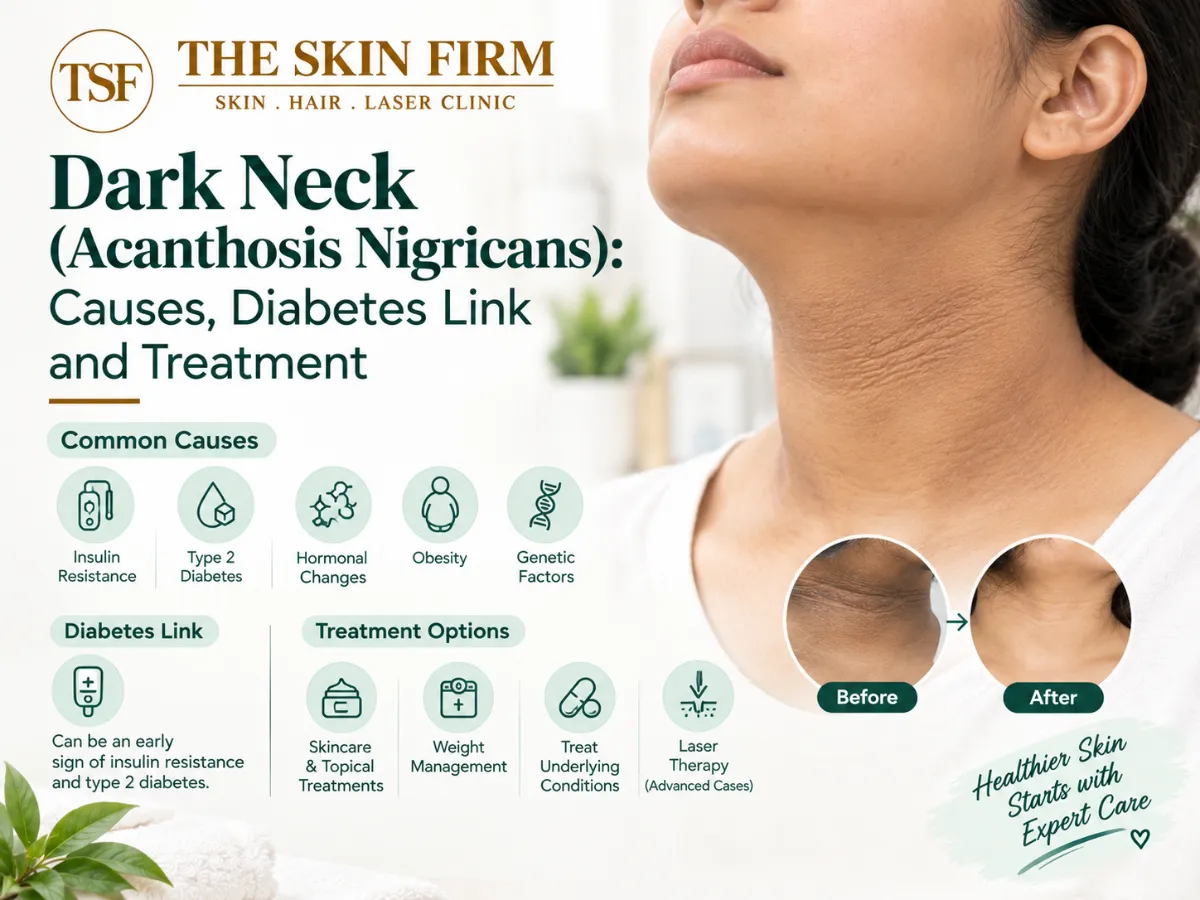
The most common cause is insulin resistance. When the body doesn't respond well to insulin, the pancreas makes more of it. High insulin levels stimulate skin cells and pigment cells to multiply, which produces the thickened, dark skin.
Insulin resistance is linked to:
- Being overweight, especially around the waist
- Prediabetes and type 2 diabetes
- Polycystic ovary syndrome (PCOS), which is why AN often appears with acne, irregular periods and facial hair in young women. Read more in our PCOS and skin guide
- A family history of diabetes
The link is strong in India. A study of Indian children and young people published in the Indian Dermatology Online Journal found that those with acanthosis nigricans were much more likely to have insulin resistance. That is why many doctors treat a dark neck as a reason to check blood sugar, especially in young people.
Less common causes include:
- Hormonal conditions such as thyroid disease or Cushing's syndrome
- Some medicines, including steroids, some hormonal treatments and high-dose niacin
- Inherited AN, which runs in families and may appear in childhood
- Rarely, internal cancer. This type usually appears suddenly in an older adult, spreads quickly and may affect the palms, lips or mouth. It needs prompt medical evaluation
Is it acanthosis nigricans, tanning or something else?
Not every dark neck is AN. A doctor will look at the texture, pattern and your history.
- Acanthosis nigricans: What it looks like: Velvety, thickened, darker skin in folds; may have skin tags; Clue: Weight gain, diabetes, PCOS or family history
- Sun tan: What it looks like: Even darkening on sun-exposed areas, with a line where the collar sits; Clue: Fades over weeks with sun protection
- Friction pigmentation: What it looks like: Darkening where collars, chains or dupattas rub; Clue: Matches the rubbing area
- Terra firma-forme dermatosis: What it looks like: Dark, "dirty-looking" patches that don't wash off with soap; Clue: Comes off when wiped with rubbing alcohol (doctor's test)
- Contact dermatitis with pigmentation: What it looks like: Dark marks after itchy rashes from perfume or jewellery; Clue: History of itch or rash first
- Post-inflammatory pigmentation: What it looks like: Brown marks after eczema, fungal infection or injury; Clue: Previous rash in the same place
Some of these overlap, and more than one can be present at the same time.
Tests your doctor may suggest
If your dark neck looks like AN, your doctor may recommend checking:
- Fasting blood sugar and HbA1c, to look for prediabetes or diabetes
- Fasting insulin or other measures of insulin resistance, in some cases
- Lipid profile and blood pressure
- Thyroid function
- Hormone tests if PCOS is suspected (irregular periods, acne, excess facial hair)
Finding prediabetes early is valuable. Lifestyle changes at this stage can prevent or delay diabetes, and they often improve the skin too.
Why scrubbing and lemon make it worse
Because the patches look like dirt, many people scrub them with loofahs, rough towels, baking soda or lemon. This backfires:
- Friction triggers more pigment in Indian skin, so rubbing deepens the colour
- Lemon juice and baking soda irritate the skin and can cause burns, especially in the sun
- Bleach creams and unprescribed steroid creams can thin the skin, cause stretch marks and leave patchy colour
The thickened skin of AN comes from within, so it can't be scrubbed away.
How acanthosis nigricans is treated
The most effective treatment works on two levels: the cause inside the body and the skin itself.
1. Treat the underlying cause. For insulin-resistance AN, this is the foundation. Gradual weight loss, regular physical activity, fewer refined carbohydrates and sugary drinks, and medical treatment of diabetes or PCOS can all reduce insulin levels. Many people see the skin soften and lighten over several months once insulin resistance improves. If a medicine is the cause, your doctor may review it. Don't stop any prescribed medicine on your own.
2. Treat the skin. These help the skin look and feel better while the cause is being addressed. Your doctor will decide what's suitable:
- Prescription creams such as topical retinoids, keratolytics (urea, lactic acid or salicylic acid) or vitamin D-based creams, which soften the thickened skin
- Chemical peels, done in a series, to improve texture and tone
- Laser treatments in selected cases, after a doctor's assessment
Results are gradual and vary from person to person. Expect weeks to months, not days. If the cause isn't addressed, the darkening often returns after skin treatment stops.
Daily care for a dark neck
- Wash the neck gently with a mild cleanser. Don't scrub
- Apply a moisturiser daily; your doctor may suggest one with urea or lactic acid
- Use sunscreen on the neck if it's exposed to the sun
- Choose soft, loose collars and avoid tight chains that rub
- Avoid perfume sprayed directly on the neck
- Keep the area dry in hot, humid weather to prevent fungal infections in the folds
Acanthosis nigricans in children and teenagers
A dark neck in a child or teenager is worth taking seriously, especially if the child is overweight or has a family history of diabetes. It's often the first visible sign of insulin resistance, years before blood sugar rises. Family-wide changes help most: more outdoor play, fewer sugary drinks and packaged snacks, and regular meals. Don't put children on restrictive diets without medical advice. A paediatrician and a dermatologist can guide the right tests and plan.
What results can you expect?
AN usually improves slowly. Softening of the skin often comes before the colour lightens. People who manage to improve insulin resistance tend to see the most lasting change. Skin treatments can speed things up, but they're most useful as part of the overall plan rather than on their own. Quick or complete removal of a dark neck isn't a realistic expectation.
Lifestyle changes that help insulin-related darkening
You don't need a perfect diet to improve insulin resistance. Small changes, kept up for months, make the biggest difference:
- Move every day. Aim for at least 150 minutes of brisk walking, cycling, swimming or similar activity a week. Strength exercises twice a week help muscles use sugar better
- Cut sugary drinks. Packaged juices, sweetened tea and coffee, colas and energy drinks raise insulin quickly
- Choose whole grains and protein. Swap some white rice, maida and sugary snacks for millets, whole wheat, dal, eggs, paneer and vegetables
- Watch late-night eating. Large meals late at night and frequent snacking keep insulin levels high
- Sleep well. Poor sleep worsens insulin resistance
- Lose weight gradually. Even a 5–10% reduction in body weight can improve insulin sensitivity. Crash diets are hard to sustain and can cause hair fall
If you have diabetes, PCOS or another condition, follow your physician's or gynaecologist's plan. The skin often improves alongside these changes.
Common myths about a dark neck
"It's dirt, so I need to scrub harder." AN is a change in the skin itself. Scrubbing causes friction pigmentation on top of it.
"Fairness creams will fix it." Over-the-counter fairness or bleaching creams don't treat the cause and may contain steroids or other harsh ingredients that damage skin.
"Only overweight people get it." Insulin resistance is the most common cause, but AN can also be inherited, linked to hormones or medicines, or seen in people with a normal weight.
"Once it appears, it's permanent." Many people see real improvement when the cause is treated, although the timeline and degree of improvement vary.
Dark neck in men
Men are as likely as women to get AN, but they often notice it later because collars hide it. Men with a dark neck plus a growing waistline, high blood pressure or a family history of diabetes should get their blood sugar checked. Shaving and tight collars can add friction darkening on the sides of the neck, so loose collars and a gentle shaving routine help.
When to see a doctor
See a doctor if:
- Your neck, armpits or groin have become darker and velvety
- The darkening appeared quickly or is spreading
- You also have weight gain, irregular periods, excessive thirst or frequent urination
- You have a family history of diabetes
- There is itching, pain or a rash in the area
- Darkening appears on the palms, lips or inside the mouth (needs prompt assessment)
If you'd like a doctor to check your dark neck and advise on tests and treatment, you can book a consultation at The Skin Firm, a skin, hair and laser clinic at NIBM Road, Pune.
References
- Acanthosis nigricans — DermNet
- Acanthosis nigricans: overview — American Academy of Dermatology
- Acanthosis nigricans — NHS
- Association of acanthosis nigricans and insulin resistance in Indian children and youth — Indian Dermatology Online Journal, 2019
This article is for general information and isn't a substitute for a medical consultation. Editorial note: drafted with AI assistance and medically reviewed before publication.