 Add as a preferred source on Google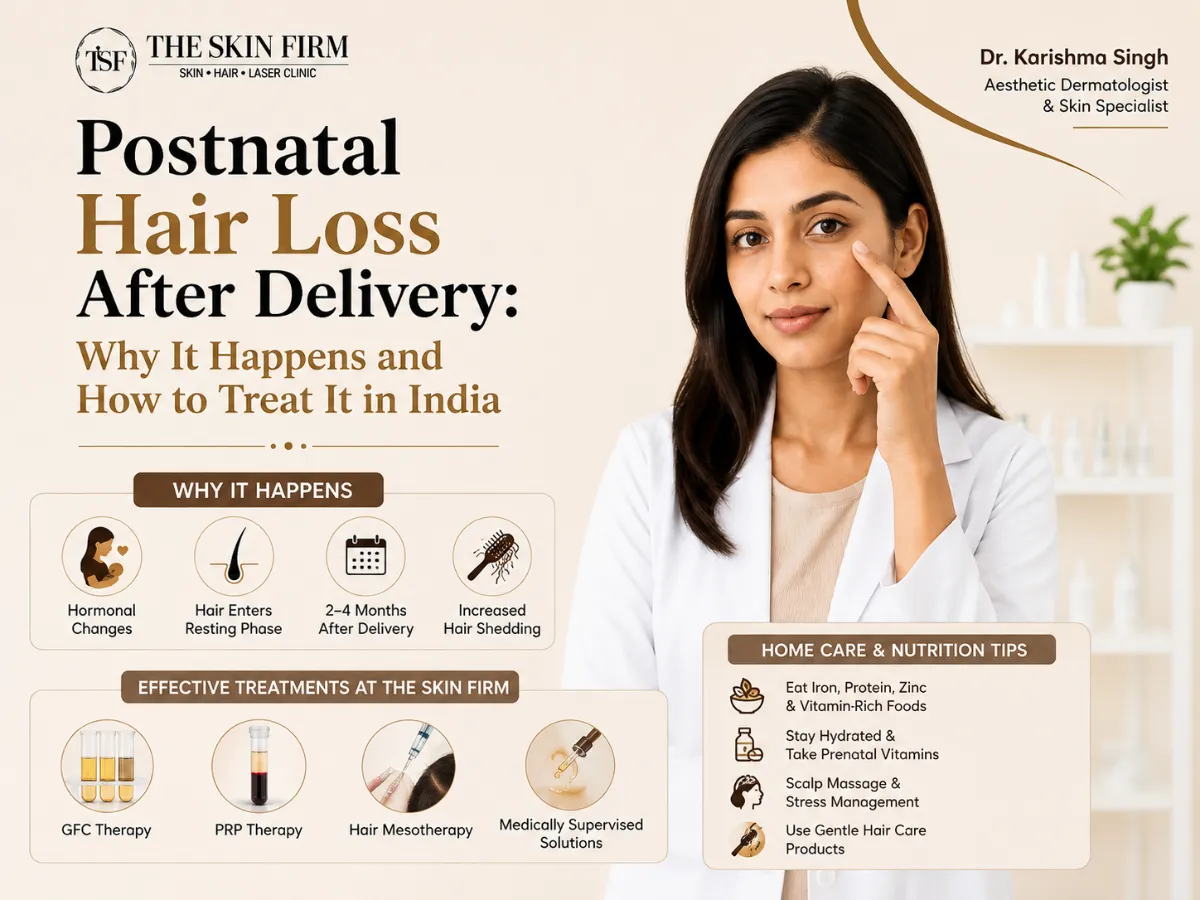
You have just brought a new life into the world — and then, 2-4 months later, your hair starts falling out in alarming amounts. Clumps in the shower drain, on your pillow, in your hairbrush. This is postnatal hair loss — one of the most common and distressing experiences for new mothers in India, yet one that is still widely misunderstood and under-treated.
At The Skin Firm — South Pune's best skin clinic and aesthetic clinic at NIBM Mohammed Wadi — Dr. Karishma Singh, skin specialist and aesthetic dermatologist, treats many new mothers every month experiencing significant postnatal hair loss. This guide explains the science behind why it happens, when you should be concerned, and what the most effective treatments available in India are in 2026.
What is Postnatal Hair Loss? The Science Explained Simply
Postnatal hair loss — clinically called postpartum telogen effluvium — is a well-understood, temporary condition caused by hormonal changes after delivery. Here is what happens:
During pregnancy, elevated oestrogen levels extend the anagen (active growth) phase of hair follicles — meaning fewer hairs than normal enter the telogen (resting/shedding) phase. This is why many pregnant women notice their hair becoming fuller, thicker, and seemingly healthier during the second and third trimesters.
After delivery, oestrogen levels drop sharply back to pre-pregnancy baseline. This sudden hormonal shift signals a large cohort of hair follicles — all those that stayed in the active phase during pregnancy — to simultaneously enter the telogen phase. 2-4 months later (the telogen phase duration), they all begin shedding at once, causing what feels like dramatic hair loss.
In reality, what you are losing is the extra hair you retained during pregnancy — not hair beyond your normal pre-pregnancy baseline. Most women return to their pre-pregnancy hair volume by 6-12 months postpartum without any treatment.
When is Postnatal Hair Loss Normal — and When Should You Be Concerned?
Postnatal telogen effluvium is normal when:
- Hair loss begins 2-4 months after delivery and is most intense between months 3-6 postpartum
- The shedding is diffuse (all over the scalp), not patchy or concentrated in specific areas
- Hair loss begins slowing and reversing by 9-12 months postpartum
- No other symptoms of thyroid dysfunction, severe nutritional deficiency, or significant scalp changes are present
You should consult a skin specialist or skin expert urgently if:
- Hair loss continues to worsen beyond 6 months postpartum without any signs of recovery
- Hair loss is patchy (bald patches) — this may indicate alopecia areata, which requires different treatment
- The hair parting appears significantly wider than before pregnancy — possible androgenetic alopecia triggered by PCOS
- Hair loss is accompanied by excessive fatigue, weight changes, cold intolerance, or mood changes — possible postpartum thyroid dysfunction
- You develop scalp tenderness, flaking, or redness — possible inflammatory or fungal scalp conditions
Key Causes That Worsen Postnatal Hair Loss
- Iron Deficiency (Most Common Nutritional Cause): Ferritin (stored iron) levels drop significantly during pregnancy and delivery — often below the threshold required for healthy hair follicle function. Iron deficiency is present in up to 70% of postpartum Indian women and significantly prolongs and worsens telogen effluvium. A serum ferritin test (not just haemoglobin) is essential — Dr. Karishma Singh recommends this as a first investigation for all postnatal hair loss patients.
- Vitamin D Deficiency: Widespread in India due to cultural sun avoidance and dietary patterns. Vitamin D receptors in hair follicles play a crucial role in the hair growth cycle. Low levels extend telogen effluvium and impair recovery.
- Thyroid Dysfunction: Both hypothyroidism and hyperthyroidism can cause or worsen hair loss. Postpartum thyroiditis — a temporary thyroid dysfunction occurring in 5-10% of women within 12 months of delivery — is a significant and often missed cause of prolonged postnatal hair loss.
- Zinc and Biotin Deficiency: Both are essential for hair follicle health. Zinc is particularly important for scalp sebum regulation and keratin synthesis. Deficiencies worsen postpartum hair loss and delay recovery.
- Breastfeeding-Related Nutritional Drain: Breastfeeding increases nutritional demands significantly. Mothers who do not adequately supplement their nutritional intake during this period experience greater postnatal hair loss.
- Stress and Sleep Deprivation: The physical and emotional demands of new motherhood — sleep disruption, stress, and altered routines — elevate cortisol, which prolongs telogen effluvium and impairs hair follicle cycling.
Home Care Strategies for Postnatal Hair Loss
- Prioritise nutrition: focus on iron-rich foods (lentils, spinach, red meat), vitamin D sources, zinc-rich foods, biotin (eggs, nuts), and protein (essential for keratin production)
- Get tested: ask your doctor for serum ferritin, vitamin D, B12, zinc, and thyroid function tests — treat any deficiencies identified
- Use a gentle, volumising shampoo — avoid harsh sulfates that strip scalp oils and cause mechanical hair breakage
- Reduce heat styling: excessive heat causes hair breakage, compounding the appearance of hair loss
- Be gentle with wet hair: use a wide-tooth comb, never brush wet hair vigorously
- Scalp massage (5-10 minutes daily): improves blood circulation to follicles and reduces stress — supported by emerging clinical evidence
- Continue prenatal multivitamins throughout the breastfeeding period — they cover many of the nutritional gaps that worsen postnatal hair loss
Professional Treatments for Postnatal Hair Loss at The Skin Firm
For new mothers whose hair loss is prolonged, severe, or not recovering by 6-9 months postpartum — or those who want to accelerate recovery and prevent permanent reduction in hair density — professional treatments from our skin experts at The Skin Firm offer significant benefit:
GFC Therapy (Growth Factor Concentrate)
GFC is an advanced, higher-potency evolution of PRP that delivers a concentrated dose of growth factors directly to the hair follicle level — stimulating dormant or miniaturised follicles back into the active growth phase. For postnatal hair loss patients, GFC provides significantly faster visible improvement than PRP alone. 3-6 monthly sessions are recommended, with results visible from session 2-3. More at: theskinfirm.in/gfc-therapy-in-pune/
PRP (Platelet-Rich Plasma) Therapy
PRP uses the patient's own growth factors — derived from centrifuged blood — injected into the scalp to stimulate follicle activity and improve scalp blood supply. Highly effective for postnatal telogen effluvium and well-tolerated by new mothers. Safe to use during breastfeeding as it is autologous (from the patient's own blood). More at: theskinfirm.in/hair-loss-treatment-in-pune/
QR678 and Hair Mesotherapy
Growth factor peptide injections delivered directly into the scalp — promoting follicle health, reducing further shedding, and accelerating the transition of telogen follicles back to the anagen phase. Effective as a standalone treatment or in combination with GFC or PRP.
Medically Supervised Minoxidil (Post-Breastfeeding Only)
Topical Minoxidil 2% or 5% is effective for postnatal hair loss — particularly when combined with other treatments. It is not recommended during breastfeeding as a safety precaution. After breastfeeding is complete, it can be an effective addition to a comprehensive hair recovery plan.
Book Your Postnatal Hair Loss Consultation at The Skin Firm
Do not wait 12 months hoping your hair recovers on its own when effective treatments are available now. At The Skin Firm — South Pune's best aesthetic clinic and skin care clinic — Dr. Karishma Singh and our skin experts create personalised postnatal hair loss treatment plans that address both the underlying nutritional factors and stimulate follicle recovery. Book your consultation today: theskinfirm.in/postnatal-hair-loss-treatment-in-pune/
Book Your Consultation at The Skin Firm
Ready to start your skin care journey? Visit The Skin Firm — South Pune's best skin clinic — for personalised skin care treatments by our expert skin specialists.
📍 1st Floor, Society Gate 1, Plot no.1, NIBM Post Office Rd, opp. Tribeca Highstreet, Mohammed Wadi, Pune 411060
📞 +91 8308669966
🕐 Tuesday – Sunday: 10:00 AM – 8:00 PM | Monday: Closed
📅 Arrive 15 minutes early · 24-hour cancellation notice required