 Add as a preferred source on Google
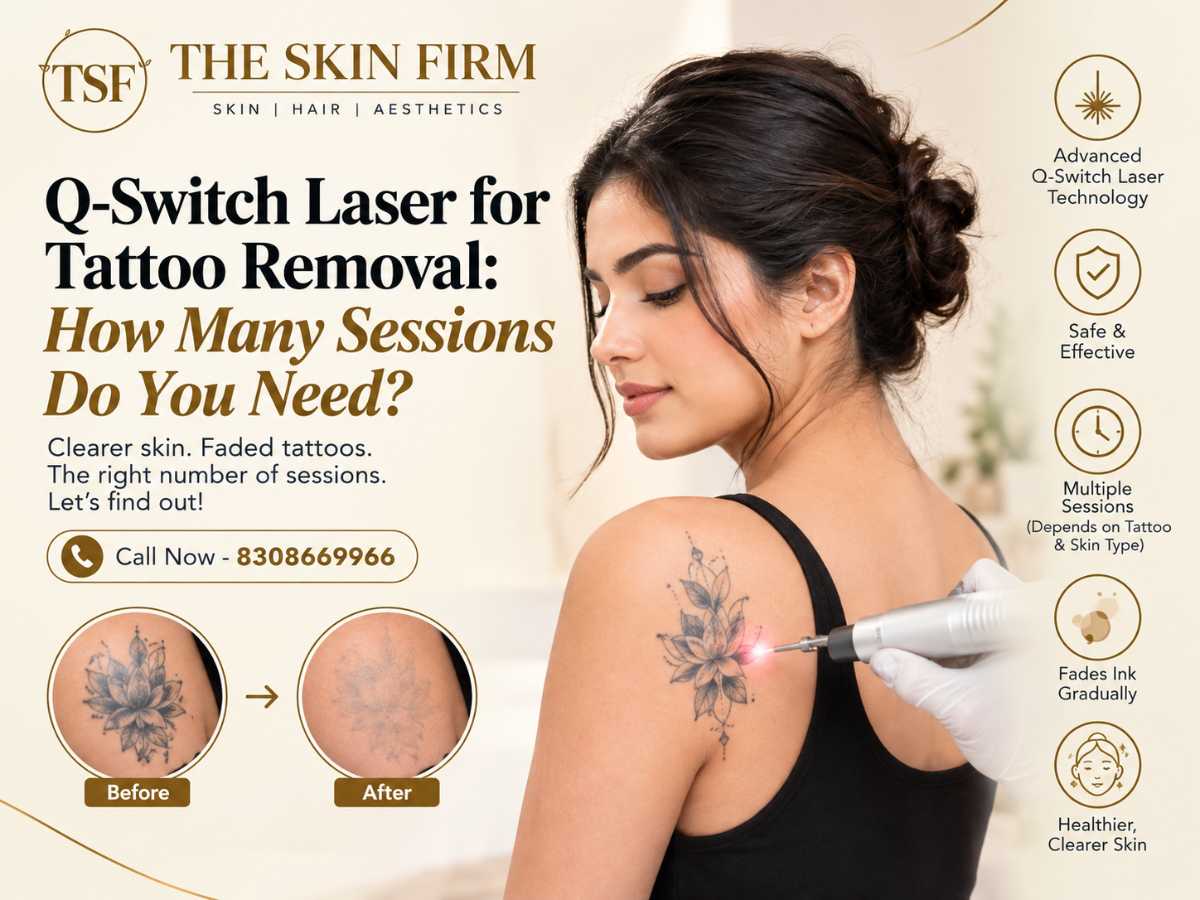
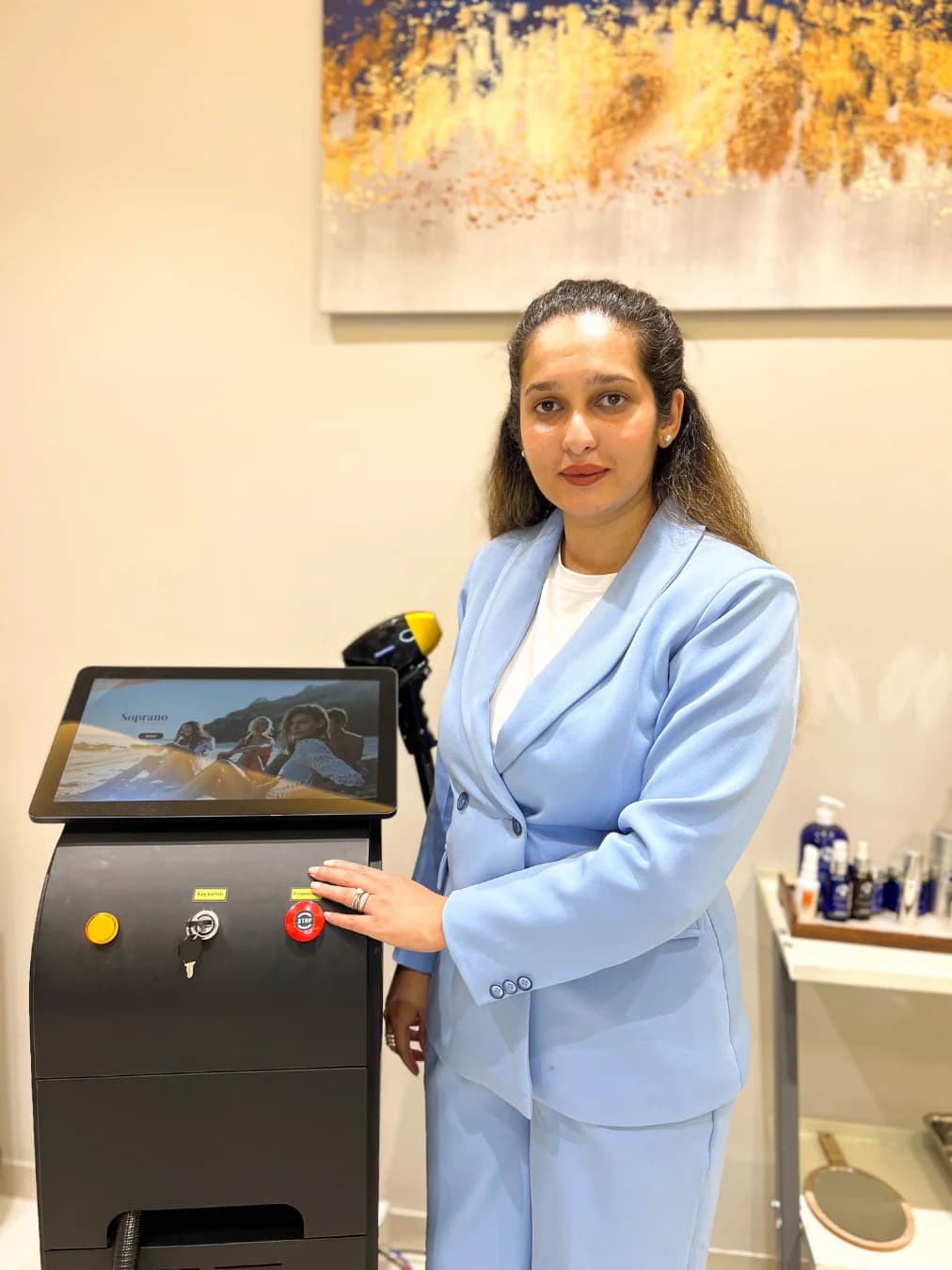
Getting a tattoo is a decision made in a moment; removing one takes considerably more patience. If you are researching laser tattoo removal in Pune, the question that comes up more than any other is simple: how many sessions will this actually take? At The Skin Firm — a skin, hair and laser clinic at NIBM Mohammed Wadi — Dr. Karishma Singh, Skin & Aesthetic Specialist and Founder, explains exactly what determines your session count with Q-Switch Nd:YAG laser, the gold-standard technology for tattoo removal in India today.
How Q-Switch Nd:YAG Laser Actually Removes a Tattoo
Tattoo ink sits deep in the dermis, in particle sizes far too large for your body's immune system to clear on its own. Q-Switch Nd:YAG laser works by delivering extremely short, high-energy pulses of light that are selectively absorbed by the tattoo pigment. This rapid energy absorption shatters the ink particles into fragments small enough for your body's own macrophages — immune cells that scavenge foreign material — to gradually clear away over the following weeks.
This is precisely why tattoo removal cannot happen in a single visit. Each session breaks the ink down a little further; your body then needs several weeks to clear the fragmented pigment before the next session, and the gap between sessions is decided by the treating doctor. Sessions placed too close together can increase irritation without improving the result.
What Actually Determines Your Session Count
- Ink Colour: Black and dark blue inks often respond more readily to Q-Switch laser treatment. Green, yellow, and light colours are tend to be more resistant and often require additional sessions, sometimes combined with a different wavelength.
- Ink Density and Layering: Professionally done tattoos with dense, heavily layered ink take longer to clear than lighter, amateur-style tattoos. A tattoo that was touched up multiple times over the years typically has more ink to break down than one done in a single sitting.
- Tattoo Age: Older tattoos have often already faded slightly and had some ink naturally cleared by the body over years, which can mean fewer sessions than an identical, freshly done tattoo.
- Skin Tone: On darker skin tones, including many Indian skin types, laser settings need to be chosen carefully to reduce the risk of pigment changes in the surrounding skin. This can affect how many sessions are needed, and the doctor will discuss this at the consultation.
- Tattoo Location: The location of the tattoo on the body can affect how quickly the ink clears, and this is assessed at the consultation.
Realistic Session Expectations by Tattoo Type
Based on the factors above, this is the general picture. The number of sessions is estimated only after the tattoo is examined at the consultation:
- Small, Single-Colour Black Tattoo: Usually needs fewer sessions than larger or multi-coloured designs.
- Medium Tattoo with Some Shading: Denser ink and shading generally take more sessions to break down.
- Large, Multi-Colour Tattoo: Often needs the most sessions, particularly if the design includes green, yellow or light colours that resist laser energy.
- Amateur or Faded Tattoo: May need fewer sessions, since these tattoos often have less ink at a shallower depth.
These are estimates, not guarantees. At your consultation, Dr. Karishma Singh examines your specific tattoo — colour composition, density, location, and age — before providing a personalised session estimate rather than a generic number.
What Happens During and After Each Session
The length of a Q-Switch laser session depends on the size of the tattoo. A topical numbing cream may be used beforehand; many people describe the sensation as similar to a rubber band snapping against the skin.
Right after treatment, the area may appear white or frosted — a normal, temporary reaction as the laser energy interacts with the ink. Mild redness, swelling, and pinpoint bleeding can occur and typically resolve within a few days. Over the following weeks, you may notice scabbing or blistering as your skin heals and the fragmented ink continues to clear — this is a normal part of the process and should never be picked at, as doing so increases scarring risk.
Aftercare After Laser Tattoo Removal
- Keep the treated area clean and covered as advised by your doctor
- Apply a gentle, fragrance-free healing ointment as directed by your doctor
- Avoid picking at scabs or blisters — this increases the risk of scarring and can slow ink clearance
- Apply sunscreen once the area has healed, and protect the area from the sun
- Avoid swimming pools, saunas and direct sun exposure until your doctor says the area has healed
- Follow the aftercare instructions given at your consultation, and contact the clinic if you notice signs of infection, severe blistering or unusual pain
Q-Switch Laser vs Other Tattoo Removal Methods
Before choosing laser removal, it is worth understanding how laser removal compares with the other methods you may see marketed online.
Tattoo removal creams sold online promise gradual fading through chemical exfoliation, but they cannot reach ink deposited in the dermis — the layer where tattoo pigment actually sits. At most, these products mildly fade the very top layer of skin; at worst, they cause irritation, burns, or scarring without touching the underlying ink at all. Dermatologists generally do not recommend them as a removal method.
Surgical excision — physically cutting out the tattooed skin and stitching the wound closed — is occasionally used for very small tattoos, but it leaves a linear scar and is impractical for anything beyond a few centimetres. It is rarely the first-line recommendation when laser removal is available.
Tattoo cover-ups (getting a new tattoo designed to disguise the old one) do not remove ink at all — they simply layer more ink on top, which can actually make future laser removal more complicated if you later change your mind. For people who want the tattoo removed rather than covered, laser treatment is the method generally used to break down tattoo pigment in the skin, and which doctor performs it is confirmed at the consultation.
Common Myths About Laser Tattoo Removal
- Myth: One session removes the tattoo completely. Reality: Even small, simple black tattoos need multiple sessions because your body can only clear a limited amount of fragmented ink between treatments. No legitimate clinic promises single-session removal.
- Myth: Laser removal always leaves a scar. Reality: When performed correctly with proper aftercare, Q-Switch laser removal rarely causes scarring. Scarring risk increases mainly from picking at healing skin or from using outdated, poorly calibrated equipment.
- Myth: All tattoo colours respond the same way. Reality: As covered above, black ink responds fastest while green, yellow, and light colours are considerably more resistant, sometimes requiring specialised wavelengths beyond standard Q-Switch treatment.
- Myth: Removal is more painful than getting the tattoo. Reality: Most patients report the sensation as comparable to, or milder than, the original tattooing process, particularly with topical numbing cream applied beforehand.
Why Choose Q-Switch Nd:YAG at The Skin Firm
Tattoo removal needs the right type of laser: Q-Switch Nd:YAG lasers are designed for tattoo pigment, whereas IPL systems are not. Settings are chosen for your skin tone and tattoo, and the doctor who performs the treatment is confirmed at the consultation. You can read about the broader applications of this laser at q switch nd yag laser treatment in Pune.
If you are also exploring laser hair removal alongside tattoo removal, the doctor can advise on scheduling both treatments without overlapping recovery periods — visit laser hair removal in Pune for details.
Cost Factors and What Influences Your Total Investment
Patients researching tattoo removal in Pune often ask for a single price upfront, but honest pricing depends on several variables that only become clear after an in-person assessment. Tattoo size is the most obvious factor — larger areas require more passes of the laser and therefore cost more per session — but it is far from the only one.
Ink density plays an equally significant role. A tattoo with heavy, saturated colour requires more energy and often more total sessions than a lightly shaded design of the same size, even though they occupy the same surface area. Similarly, tattoos with multiple colours may need combination approaches, since no single laser wavelength clears every pigment equally well, which can affect overall cost across your full treatment course.
At The Skin Firm, we deliberately avoid quoting a tattoo removal price before actually examining the tattoo in question. During your consultation, Dr. Karishma Singh assesses colour composition, density, size, and location, then provides a transparent, itemised estimate covering your likely total number of sessions — not just the cost of a single visit. This approach means you understand your full financial commitment before starting treatment, rather than discovering additional costs partway through your removal journey.
Book Your Tattoo Removal Consultation at The Skin Firm
Tattoo removal is a gradual, medically supervised process — not a one-visit fix. At The Skin Firm, Dr. Karishma Singh assesses your specific tattoo and provides a realistic, honest session estimate before you commit to any treatment plan. Book a consultation at The Skin Firm, Mohammed Wadi, South Pune.
Book Your Consultation at The Skin Firm
Ready to start your skin care journey? Visit The Skin Firm in Mohammed Wadi, South Pune, to discuss personalised skin care with our doctors.
Contact The Skin Firm
- 1st Floor, Society Gate 1, Plot no.1, NIBM Post Office Rd, opp. Tribeca Highstreet, Mohammed Wadi, Pune 411060
- +91 8308669966
- hello@theskinfirm.in
- Tuesday – Sunday: 10:00 AM – 8:00 PM | Monday: Closed
- Appointment Policy: Please arrive 15 minutes early. 24-hour cancellation notice required.
- theskinfirm.in