
 Add as a preferred source on Google
Written by The Skin Firm clinical content team · Medically reviewed by Dr. Monica C., MD (Dermatology, Venereology & Leprosy) · Reviewed on 16 October 2026
Quick answer
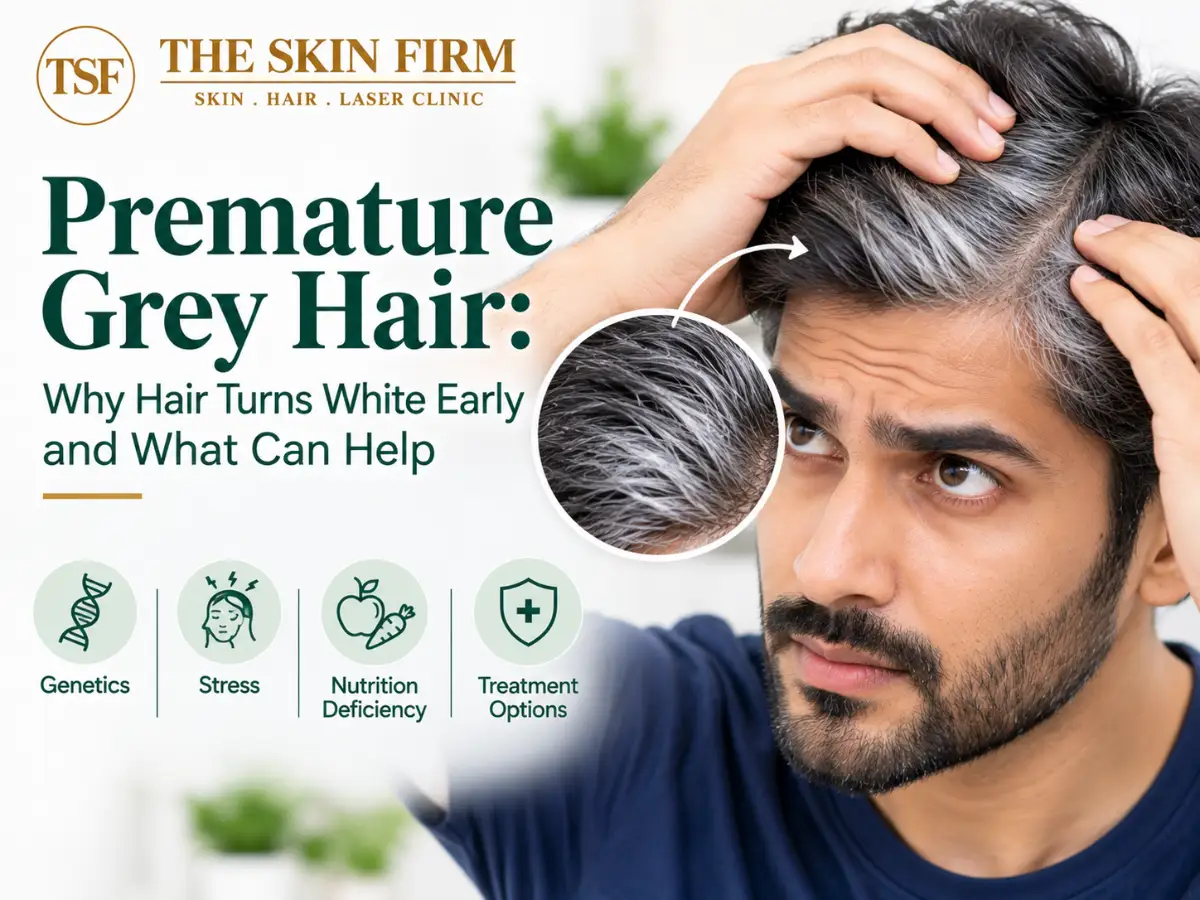
Premature greying is grey or white hair appearing earlier than usual, generally before 25 in people of Indian or Asian origin. Genetics is the most common cause. Deficiencies (vitamin B12, iron, vitamin D, copper), thyroid problems, smoking and some autoimmune conditions can also contribute. Correcting a deficiency or stopping smoking may slow further greying, but genetically grey hair rarely turns dark again. Safe colouring is the most reliable way to cover it.
Finding white strands in school or college is common in India, and it's one of the most searched hair questions online. The answers you'll find range from sensible advice to miracle oils. This guide sets out what the research actually says about why hair turns grey early, which tests are worth doing, what may help and how to colour hair safely. If you're also losing hair, see our page on hair loss treatment in Pune.
Why does hair turn grey?
Hair gets its colour from melanin, made by pigment cells (melanocytes) at the base of each hair follicle. With age, these cells gradually produce less pigment and eventually stop. Hairs that grow without pigment look grey or white.
The timing of this process is largely inherited. Oxidative stress, the build-up of chemical damage inside cells, is thought to speed it up. Anything that increases oxidative stress or affects the pigment cells, such as smoking, deficiencies or some medical conditions, may bring greying forward.
What counts as premature greying?
Doctors usually describe greying as premature if it begins before about 20 in white Europeans, before 25 in Asians, including Indians, and before 30 in people of African origin. A few white hairs at 20 are common. Noticeable greying across the scalp in your teens or early twenties is what usually prompts people to look for causes.
Causes of premature grey hair
Genetics. The strongest factor. If a parent or grandparent went grey early, you're more likely to as well. In most people with premature greying, no other cause is found.
Vitamin and mineral deficiencies. Indian studies of people with premature greying have found lower levels of vitamin B12, ferritin (iron stores), vitamin D3 and, in some studies, copper and calcium compared with people without greying. Low B12 is especially common in vegetarians.
Thyroid problems. Both underactive and overactive thyroid can affect hair colour and texture.
Smoking. Several studies link smoking with earlier greying, likely through oxidative stress.
Autoimmune conditions. Vitiligo, alopecia areata and pernicious anaemia (an autoimmune cause of low B12) are associated with greying.
Stress. Stress may contribute, and research in animals has shown how severe stress can affect pigment cells. In people, the link is real but less clear-cut than social media suggests.
Other factors. Low body weight, poor nutrition, certain medicines and some rare genetic conditions are also linked.
Tests worth discussing with your doctor
If you're greying early, especially with other symptoms such as tiredness, hair fall, tingling in the hands and feet or weight change, your doctor may suggest:
- Vitamin B12: Deficiency is common in India and linked to greying
- Serum ferritin and blood count: Low iron stores and anaemia
- Vitamin D3: Low levels found in several greying studies
- Thyroid function (TSH): Thyroid disease can affect hair
- Others as needed: Copper, calcium, blood sugar or autoimmune tests based on your history
Don't start high-dose supplements without testing. Taking a vitamin you aren't short of won't restore colour and can cause side effects.
Can grey hair turn black again?
This is the most common question, and the honest answer is: usually not, once the pigment cells have stopped working. A few points:
- Greying from genetics generally doesn't reverse
- Greying linked to a deficiency or thyroid problem may slow down once the cause is treated, and there are occasional reports of some hairs regaining colour, particularly when greying is recent
- Stopping smoking may slow further greying
- No cream, oil, shampoo or supplement has been proven to reverse grey hair reliably
Be cautious of products or treatments that promise to turn white hair black. If a product claims to "reverse" greying, it's likely a hair dye or temporary colour.
What may help slow greying
- Treat any deficiency under medical advice
- Stop smoking
- Eat a balanced diet with protein, leafy greens, dairy, eggs or fortified foods for B12, nuts and seeds
- Protect hair from heavy sun exposure with a cap or scarf
- Manage long-term stress where you can, with sleep, exercise and support
- Manage thyroid and other conditions with your doctor
These steps support overall hair health. They aren't guaranteed to stop greying.
Plucking grey hair: a bad idea
Plucking a white hair doesn't make more white hairs grow. But repeated plucking can damage the follicle, leading to thinner hair or no regrowth in that spot over time. Trimming individual white strands close to the scalp, or colouring them, is safer.
Colouring grey hair safely
Colouring is the most reliable way to cover grey hair. To reduce the risk of reactions:
- 1. Always patch test 48 hours before colouring, even with a product you've used before. Allergies can develop over time
- 2. Watch for PPD. Para-phenylenediamine (PPD), found in many dark dyes, is a common cause of allergic reactions: itching, redness, swelling of the face and scalp
- 3. Be careful with "black henna". Pure henna gives an orange-red colour. "Black henna" products often contain PPD, sometimes in high amounts
- 4. Don't colour broken or irritated skin, or a scalp with active dandruff or eczema
- 5. Follow timing instructions and wear gloves
- 6. Consider semi-permanent or ammonia-free colours if your scalp is sensitive, though they still need a patch test
If you develop itching, redness or swelling after colouring, wash it out and see a doctor. Severe swelling or difficulty breathing needs emergency care.
Natural remedies: what's known
Amla, curry leaves, bhringraj, coconut oil and onion juice are popular in Indian households. They may make hair look and feel healthier, and amla and curry leaves are nutritious foods. However, there's no good evidence that any of them reverse greying. Henna and indigo (pure, without added chemicals) can colour grey hair naturally, but they also need a patch test.
Grey hair and hair fall together
Some people notice greying and hair thinning at the same time. Shared causes, such as low iron, B12, vitamin D or thyroid problems, can affect both. A doctor can check for these and advise on hair fall separately. Our guide to hair fall solutions for every hair type covers the common causes of hair fall.
Premature greying in children and teenagers
A few white hairs in a child are usually harmless and often run in the family. More widespread greying in a child or teenager is worth a check-up, because it's occasionally linked to anaemia, vitamin B12 deficiency, thyroid problems or, rarely, inherited conditions. A paediatrician can arrange simple blood tests.
For children and teenagers:
- Avoid chemical hair dyes, which can cause allergies and irritate young scalps
- Focus on a balanced diet, especially if the child is vegetarian (B12 sources include milk, curd, paneer and fortified foods)
- Don't pluck white hairs
- Reassure them: greying is common, isn't a sign of poor health in most cases, and can be coloured safely later if they wish
A white patch of hair: when it's something else
A single tuft or patch of white hair (called poliosis) is different from general greying. It can be present from birth, or appear with vitiligo, alopecia areata as hair regrows, or after skin injury. If you notice a white patch of hair along with white patches on the skin, or a bald patch regrowing white, see a doctor. Our guide to alopecia areata explains why regrowing hair is sometimes white at first.
Myths about grey hair
"Washing hair with cold water prevents greying." Water temperature has no effect on pigment cells.
"Using shampoo daily causes white hair." Washing frequency doesn't change hair colour.
"Eating more curry leaves will reverse grey hair." Curry leaves are healthy food, but there's no evidence that they restore pigment.
"Hair dye causes more grey hair." Dye colours the hair shaft and doesn't affect the follicle's pigment cells. Allergic reactions are the main risk, not more greying.
"Grey hair is weaker and falls more." Grey hair can feel coarser or drier because it often has less oil and a different texture, but greying itself doesn't cause hair fall.
Caring for grey hair
Grey and white hair can feel drier, wirier and more prone to yellowing. A few habits keep it healthy whether you colour it or not:
- Use a gentle shampoo and a conditioner on the lengths
- Limit heat styling, which can yellow and damage grey hair
- Protect hair from strong sun with a cap or scarf
- If you colour, space out sessions and keep dye off the scalp where possible to lower the allergy risk
- Consider a purple-toned shampoo occasionally if white hair turns yellowish
When to see a doctor
- Greying started in your teens or early twenties and is spreading quickly
- You have tiredness, pale skin, tingling or numbness, which may suggest B12 deficiency
- You have white patches on the skin (possible vitiligo)
- Greying comes with hair fall, weight change or feeling cold
- You've had a reaction to hair dye
You can book a consultation at The Skin Firm, a skin, hair and laser clinic at NIBM Road, Pune, to discuss early greying, tests and safe hair care.
References
- Premature graying of hair — Indian Journal of Dermatology, Venereology and Leprology, 2013
- Premature graying of hair: a comprehensive review and recent insights — Indian Dermatology Online Journal, 2024
- Serum vitamin B12, ferritin and thyroid function in premature canities in Indian patients — Indian Journal of Dermatology, 2017
- Epidemiological and biochemical factors in premature graying of hair: a case–control study — International Journal of Trichology, 2018
- Premature greying of hair: care guide — IADVL
This article is for general information and isn't a substitute for a medical consultation. Editorial note: drafted with AI assistance and medically reviewed before publication.