 Add as a preferred source on Google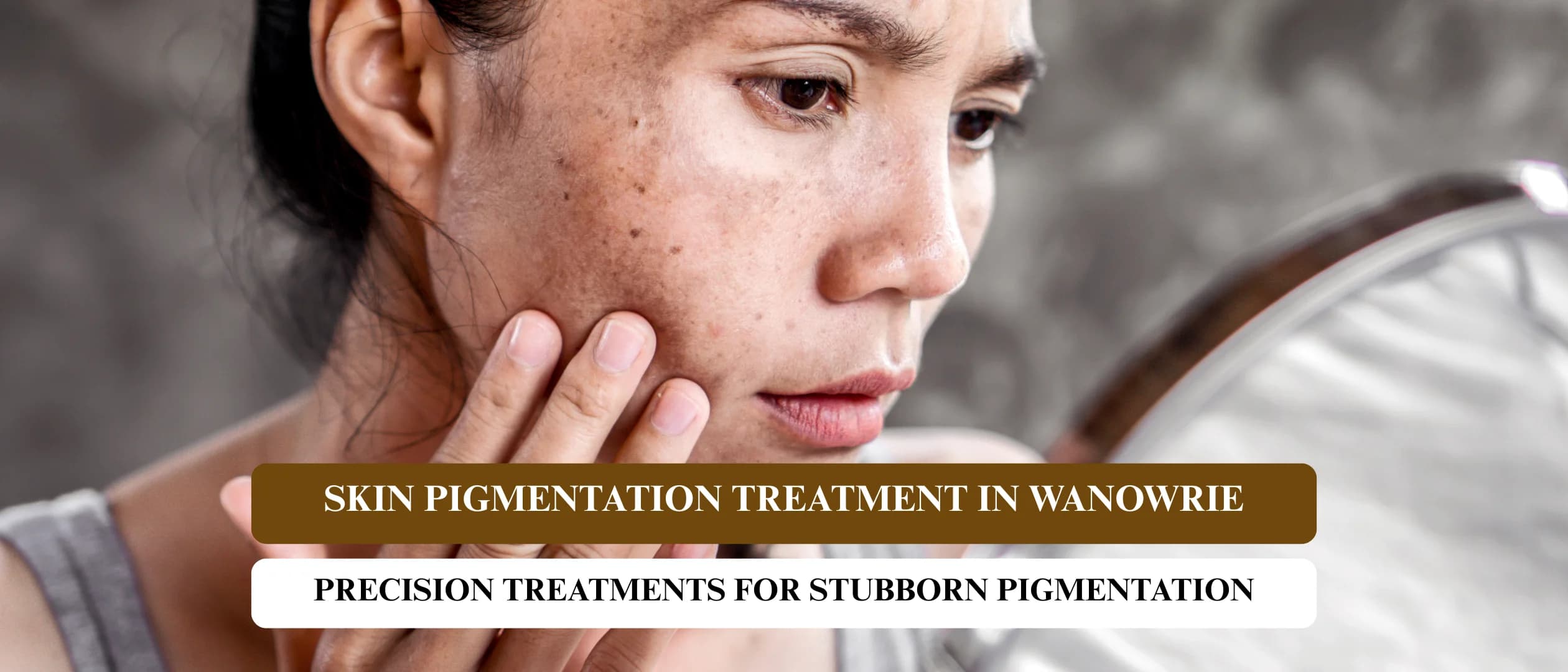
You've probably already tried the brightening serums. Maybe a few different ones. And if you're still dealing with dark patches or uneven tone, the problem isn't that you haven't found the right cream yet it's that most pigmentation doesn't live close enough to the surface for a cream to reach it.
That's not a sales pitch. It's just skin biology, and it's worth understanding before you spend more money on products.
At The Skin Firm Clinic, we see a lot of patients from Wanowrie dealing with pigmentation in some form post-acne marks, sun damage, melasma, the kind of dullness that makes your skin look tired even when you're not. It's one of the most common things we treat. It's also the thing most people spend the longest trying to fix on their own before coming in.
What Kind of Pigmentation Are We Talking About?
This matters more than most people realise. Pigmentation isn't one condition. It's a category.
Post-acne marks are probably the most common thing we see in younger patients — the dark spot left behind after a pimple clears. Technically called post-inflammatory hyperpigmentation. Indian skin is especially prone to this because melanin-rich skin tends to overreact to inflammation. The spot isn't scarring. It's excess pigment deposited while your skin was healing.
Melasma is a different beast entirely. Larger patches, usually symmetrical, most often across the cheeks or forehead. Hormonal in origin — which is why it's far more common in women, and why it tends to flare during pregnancy or with certain contraceptives. Melasma responds to treatment, but it needs a specific approach and it has a habit of coming back if you're not careful about sun exposure.
Sun damage accumulates quietly over years. Flat dark spots, especially on areas that see a lot of sun — face, hands, forearms. Pune's sun is no joke, and people who've spent years outdoors without consistent sun protection often develop this in their 30s and 40s without quite knowing where it came from.
Hormonal or internal causes — PCOS and thyroid issues can trigger pigmentation that doesn't respond to topical treatments at all until the underlying condition is addressed. This is something your dermatologist will look for.
Why does knowing the type matter? Because the treatment for one is often completely wrong for another. Treating melasma the same way you'd treat a post-acne mark is a good way to waste time and possibly make things worse.
The Indian Skin Problem No One Talks About Enough
There's a specific issue with how a lot of pigmentation treatments are applied to Indian skin tones, and it doesn't get discussed openly enough.
Darker skin has more active melanocytes — the cells that produce pigment. That's what gives Indian skin its richness. But those same cells are easily provoked. The wrong peel concentration, laser settings calibrated for lighter skin, or any treatment that causes unnecessary inflammation can trigger a surge of melanin production. You come in for pigmentation treatment and leave with more pigmentation than you started with.
This isn't rare. It happens when clinics use standardised protocols without adjusting for skin type.
At The Skin Firm Clinic, every patient gets their skin type assessed before any treatment begins. Settings and concentrations are adjusted accordingly. It sounds like a basic step — it should be. But it's skipped more often than it should be.
What Treatment Actually Looks Like
Depending on what you're dealing with, your dermatologist will usually work across a few approaches — sometimes in combination, sometimes sequentially.
Prescription topicals — The difference between a medical-grade formulation and what's in a pharmacy isn't just branding. The active ingredients, the concentrations, the delivery systems — these are all significantly different. Tretinoin, azelaic acid, tranexamic acid, kojic acid, hydroquinone when appropriate — these are prescribed based on your specific presentation, not guesswork.
Chemical peels — The word "chemical" sounds alarming and the reality is quite controlled. A peel is essentially a carefully managed exfoliation — it accelerates cell turnover and helps shift pigmentation that's sitting in the upper layers of the skin. The type and strength varies a lot by skin type and the depth of the pigmentation. Done in a series, usually 2 to 4 weeks apart.
Laser treatments — Specific wavelengths of light target melanin deposits and break them down without damaging the surrounding skin. Effective for sun spots, post-acne marks and some forms of melasma. The settings being right for your skin tone is everything here — this is not a situation where one-size-fits-all works.
Cosmelan or Dermamelan — A more intensive depigmentation protocol for persistent or severe melasma that hasn't responded adequately to standard treatment. Not the first step, but a meaningful option when it's indicated.
These aren't competing options — your dermatologist will work out which makes sense for you, in what order, and what to combine.
Why People From Wanowrie Come to The Skin Firm Clinic
Honestly, a lot of them come in having already tried two or three things that didn't work. They're not necessarily looking for the most advanced treatment — they're looking for someone to actually look at their skin and tell them what's going on.
That's what the consultation is for. Not a sales process. A dermatologist examines your skin, identifies the type and depth of pigmentation, rules out anything hormonal or internal, and builds a plan around your specific situation.
If you've been staring at the same dark patch for six months wondering why nothing's shifting, that conversation is probably overdue.
Book a consultation at The Skin Firm Clinic. Come in, get your skin assessed properly, and get a plan that's built for your skin — not for the average patient.