 Add as a preferred source on Google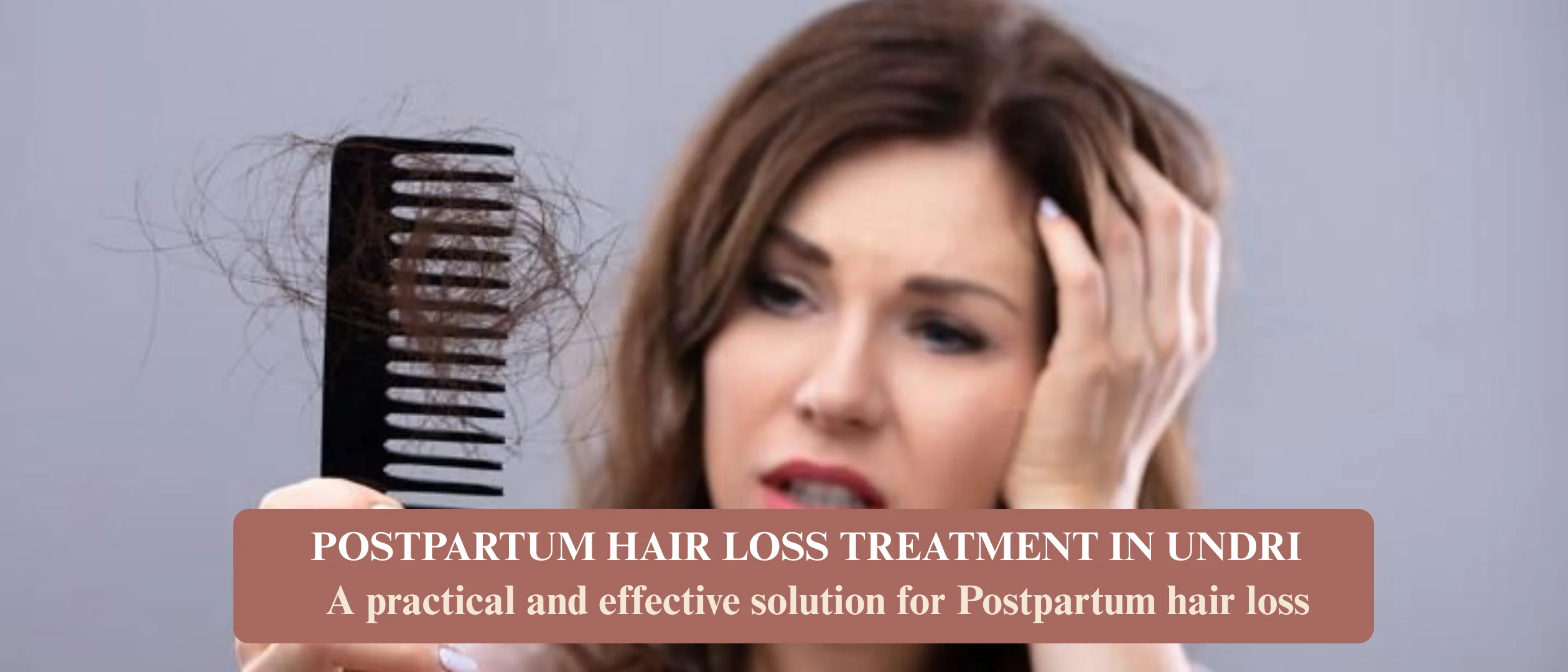
There is a particular kind of shock that comes with postpartum hair loss. You have just been through pregnancy, delivery, and the relentless early weeks of keeping a newborn alive — and now your hair is falling out in quantities that feel genuinely alarming. In the shower. On the pillow. Wound around the hairbrush every single morning.
It happens fast. And when you are already running on nothing, adjusting to the most demanding change of your life, finding clumps of hair coming away is not something you are equipped to deal with calmly.
The important thing to know first: this is not a sign that something has gone wrong. Postpartum hair loss is extraordinarily common. It has a clear biological explanation. And for the overwhelming majority of women, it does resolve.
That said — temporary does not mean easy. Hair thins visibly. Density across the scalp drops. For some women, the shedding is significant enough to affect how they feel about themselves, which matters, especially during an already vulnerable period. Knowing what is behind it and what options exist makes the whole thing easier to face.
At The Skin Firm Clinic in Undri, postpartum hair loss is one of the more regularly presented concerns. The starting point is always the same: understand what is actually driving the shedding before recommending anything.
Why It Happens
Oestrogen levels rise significantly during pregnancy, and one of the effects is that hair stays in its active growth phase longer than usual. The everyday shedding that would normally happen gradually just... does not. Which is why many women notice their hair looking noticeably thicker across those nine months.
After delivery, oestrogen drops — sharply, and quickly. All the hair that had been held in its growth phase gets released at once. The technical term is telogen effluvium. The lived experience is finding hair everywhere and wondering how you still have any left.
It typically begins around two to four months after giving birth. Here is what helps to understand: the hair falling now is not new damage. It is hair that was always going to shed. The body is simply doing several months' worth of it in a compressed window rather than spreading it out. That reframe does not make the experience less upsetting, but it does change what it means.
Most cases sort themselves out within six to twelve months. For some women, though, recovery is slower — density does not fully return, or shedding carries on longer than it should. That is when doing something about it starts to make more sense than waiting.
When to Actually Seek Help
This is where a lot of women genuinely struggle. Do you keep waiting, or do you go and get assessed?
If shedding began a couple of months ago and feels manageable, watching and waiting is reasonable. But if it has been going on past six months, if the thinning is visible enough to bother you, or if new growth simply is not appearing — more time alone is probably not the answer.
One thing that often gets missed: nutritional deficiencies. They are extremely common in the postpartum period, and they can extend or worsen hair loss significantly beyond what hormonal changes alone would cause. Iron, vitamin D, zinc, B vitamins — these are depleted during and after pregnancy far more often than people realise, and all of them affect how the hair cycle functions. Addressing a hormonal problem while an unresolved nutritional one is running in the background will only get you so far.
At The Skin Firm Clinic, both are assessed together. Because treating one while ignoring the other reliably produces incomplete results.
What Treatment Actually Involves
Mesotherapy
Mesotherapy delivers a customised blend of vitamins, minerals, amino acids, and growth factors into the scalp through fine injections — directly to the follicle, at the depth where it is actually needed. Because nothing passes through digestion first, the active ingredients arrive at the tissue intact. For follicles that have been depleted during and after pregnancy, that directness tends to produce better outcomes than oral supplements alone. A course of sessions is required, spaced a few weeks apart, with maintenance sessions to hold the results.
PRP
Platelet-rich plasma treatment draws a small amount of the patient's own blood, concentrates the platelets, and injects the resulting plasma into the areas of concern on the scalp. Platelets carry growth factors that prompt cellular repair and wake up follicles that have gone dormant.
It works particularly well for postpartum hair loss because — and this matters — the follicles are generally not gone. They are weakened or inactive. There is responsive tissue there. Results come gradually over several months, but the improvement in density and hair quality tends to be meaningful.
Nutritional Assessment
Clinical treatment underperforms when the body is depleted, and the postpartum period is one of the most reliable times for depletion to occur. Iron deficiency is especially well-linked to extended hair loss after delivery.
Nutritional status is assessed before treatment begins at The Skin Firm Clinic. Supplementation alongside clinical treatment produces better outcomes than either approach separately — consistently.
Topical Treatments
Prescription-grade topical treatments extend the hair's active growth phase and support follicular activity between clinical sessions. They are not a standalone solution, but they play a real supporting role in the overall plan.
Low-Level Laser Therapy
Light energy applied to the scalp stimulates the follicles and improves circulation. Non-invasive, painless, no recovery time required. For someone managing a newborn's schedule, that matters. It integrates well as a maintenance tool alongside other treatments.
What Probably Will Not Help Much
Hair fall shampoos and scalp serums are usually the first thing people try. They are not useless — general scalp health is worth maintaining — but they are not built to address hair loss driven by hormonal and nutritional changes happening systemically.
Home remedies are similar. Oil massages, egg masks, various things passed around in new parent circles. Scalp massage has actual value for circulation and is worth doing regularly. The topical treatments themselves, though, rarely reach the level of the follicle in any clinically meaningful way.
The point is not that scalp care does not matter. The point is that when the cause is internal, the solution needs to be too.
What Recovery Actually Looks Like
Slow at first. Shedding reduces before anything visibly improves. Then shorter hairs begin appearing — new growth coming through at the scalp — and that is the sign that things are moving.
The hair growth cycle operates in months, not weeks. Even with the right treatment in place, patience is part of the process. For women who begin treatment during active shedding, the aim is to support the follicles through that phase and make recovery as full as possible. For those who come in later, once shedding has slowed but density has not returned, the focus is on reactivating follicles that have stayed dormant too long.
Either way — consistency matters more than anything else. A full course of treatment, properly followed through, is what actually moves the needle. Occasional sessions do not tend to.
Treatment at The Skin Firm Clinic in Undri is built around where each patient actually is — two months postpartum is a different clinical picture from twelve months, and the plan reflects that.
What Helps at Home in the Meantime
Eat well. Iron, protein, a broad range of vitamins. If consistent eating is difficult during a sleep-deprived stretch of new parenthood — and it often is — supplementation fills the gap.
Be gentle with your hair. No tight styles, less heat, patience when detangling. These will not reverse anything on their own, but they prevent additional damage during a period when hair is already under strain.
Rest when you can. Sustained stress genuinely does worsen shedding. Accept help when it is available. Your body has done something extraordinary and is still recovering — it deserves some consideration.
Undri and Surrounding Areas
For women in Undri and nearby parts of Pune, access to a clinic that treats postpartum hair loss as the genuine clinical concern it is — rather than something to simply wait out — is worth knowing about. The Skin Firm Clinic is reachable from Undri and surrounding areas including Pisoli, Kondhwa, Wanowrie, and NIBM.
Postpartum hair loss is distressing. It is also one of the more treatable forms of hair loss, precisely because the cause is known and the follicles are usually still there and still capable of responding. Recovery with proper support tends to be faster and more complete than waiting alone produces.
If shedding has gone on longer than you expected, if the thinning is noticeable enough to affect you, or if you simply want a clear picture of where things stand — a consultation at The Skin Firm Clinic in Undri is the right place to start.